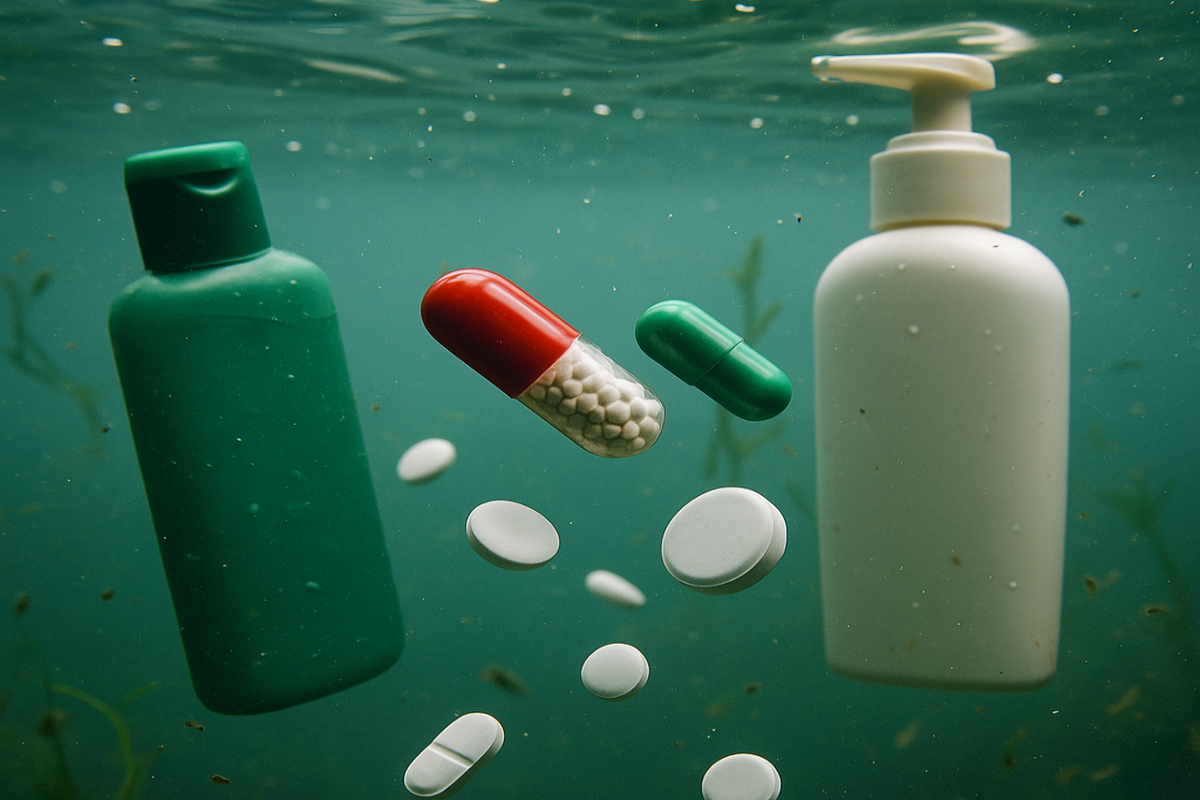
Micropollutants are currently one of the most relevant topics in the field of wastewater treatment.
Pharmaceuticals and cosmetic products that reach watercourses disrupt the natural functioning of plant and animal life and are almost indestructible.
These substances belong to the group of micropollutants and enter water systems in several ways — through sewage networks via the human body, through improperly disposed of unused medicines, and through wastewater discharged from manufacturing facilities that produce such products.
As the market for pharmaceuticals and especially cosmetic products grows daily, so does the need for efficient methods of removing these pollutants from wastewater.
Current data show that a certain concentration of micropollutants has been found in almost all European rivers, and Serbia is no exception.
In the study Survey on the Micro-pollutants Presence in Surface Water System of Northern Serbia and Environmental and Health Risk Assessment (2018), conducted in Vojvodina across four rivers, one irrigation canal, and two lakes, 127 micropollutants were detected out of a total of 940 analyzed substances.
Once these substances reach rivers and lakes, they accumulate over time because they are chemically stable and difficult to degrade.
Hormonal drugs (such as contraceptives and estrogens) cause feminization in fish — males develop female characteristics, which threatens reproduction.
Antibiotics in water disturb the microbiological balance and kill beneficial bacteria, while analgesics (such as diclofenac) cause liver and kidney damage in fish and birds.
These substances alter the chemical composition of water and affect phytoplankton, algae, and insects, disrupting the entire food chain.
Cosmetic products such as shampoos, soaps, lotions, creams, and perfumes have a similar negative impact — they alter enzymatic activity and metabolism in aquatic organisms.
Wastewater treatment plants around the world struggle to eliminate micropollutants, as conventional systems are designed to remove organic matter, not complex chemical compounds.
The Netherlands has gone the furthest in this field, developing advanced technologies to eliminate such pollutants.
The process combines biological activated carbon filtration (BAC) and oxidative treatment using ozone or hybrid oxidants, achieving high efficiency in removing pharmaceuticals and cosmetic chemicals from water.
Addressing micropollutants has become a global priority, as they know no borders — they enter rivers, lakes, and groundwater, and ultimately the food chain.
The Dutch example shows that progress is possible through innovation, cooperation between science and government, and a long-term vision for environmental protection.
For Serbia, this means it is time to start considering the “fourth stage” of wastewater treatment already in the planning phase of new plants and sewage infrastructure — to protect future generations from the pollution we cannot see but which is already transforming our world.
photo: ilustration AI