
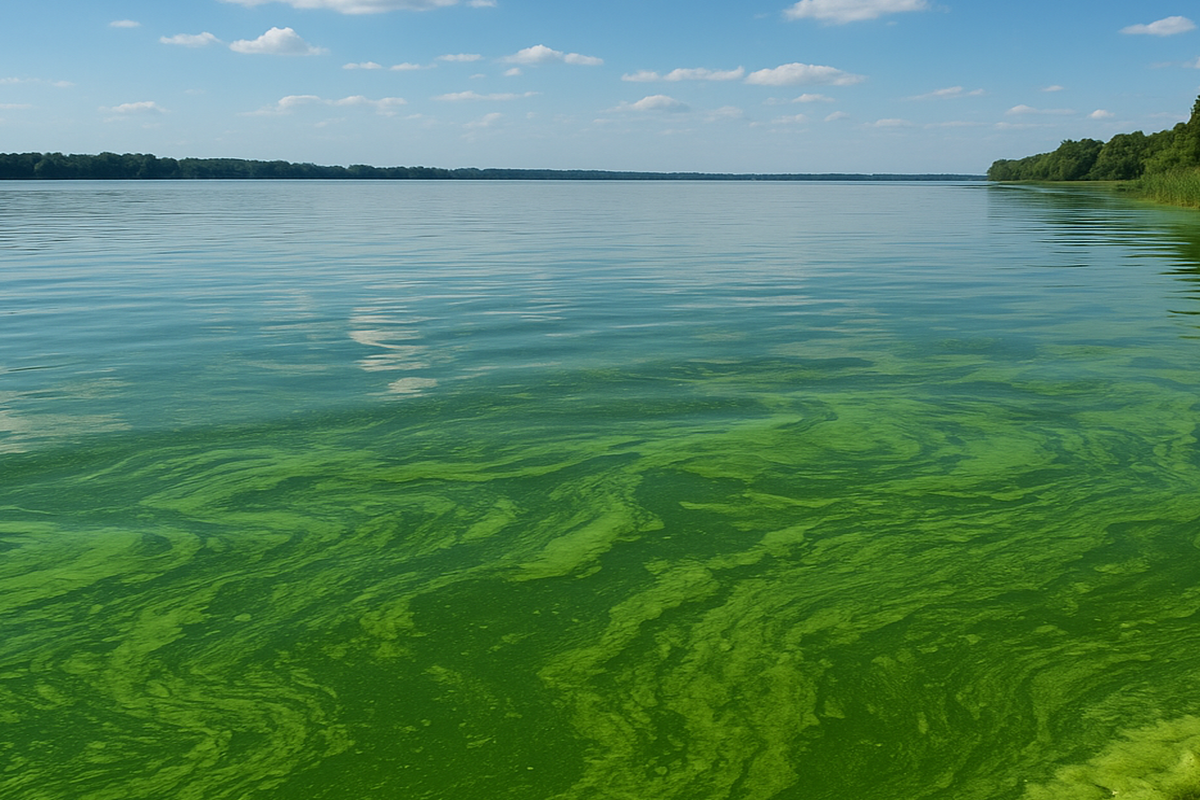
Eutrophication is becoming a threat to ecosystems

In some lakes and rivers in Serbia, the process of eutrophication is evident. This process occurs most often due to the absence of sewage systems and wastewater treatment processes.

Eutrophication occurs when water becomes overly enriched with nutrients, primarily nitrogen and phosphorus. These nutrients come from:
• Wastewater (domestic and industrial)
• Agricultural fertilizers (runoff from fields)
• Detergents and other chemicals

This process manifests as excessive growth of algae and aquatic plants (so-called “algal blooms”), a decrease in oxygen levels in the water when algae die and begin to decompose, the appearance of unpleasant odors, and turbid water.

The consequences of eutrophication are: the death of fish and other aquatic organisms due to lack of oxygen, reduction of biodiversity (variety of species), changes in the chemical composition of water, which makes its use for drinking, recreation, or irrigation more difficult.

According to available information, lakes with evident eutrophication in Serbia include Palić and Ludaš, Međuvršje, the Zobnatica reservoir, and some others.

The United Nations Environment Programme (UNEP), which studies challenges related to phosphorus pollution and its impacts on biodiversity and ecosystems, particularly highlights eutrophication of aquatic systems as a growing problem. “Globally, phosphorus losses from land to freshwater have doubled in the last century and continue to rise. Despite significant efforts to reduce nutrient pollution,” the program states.

Phosphorus was discovered more than 350 years ago and is an essential nutrient that helps plants grow. Its primary use is in the production of synthetic fertilizers to increase crop yields, making it crucial for food security. Phosphorus is also a key component of animal feed and is used in steel production, food additives, batteries for electric vehicles, certain pesticides, and household cleaning products.

The UN does not rule out the continued use of phosphorus but emphasizes that the key is to use it more sustainably and prevent excessive amounts from entering the environment.

“Wastewater releases about 3 million tons of phosphorus into the environment worldwide each year. Proper treatment could reduce phosphorus and nitrogen concentrations in wastewater by at least 80%. Solutions will require innovations—not only in technology but also in operational methods and cooperation between sectors that have traditionally not collaborated,” states the UNEP website.
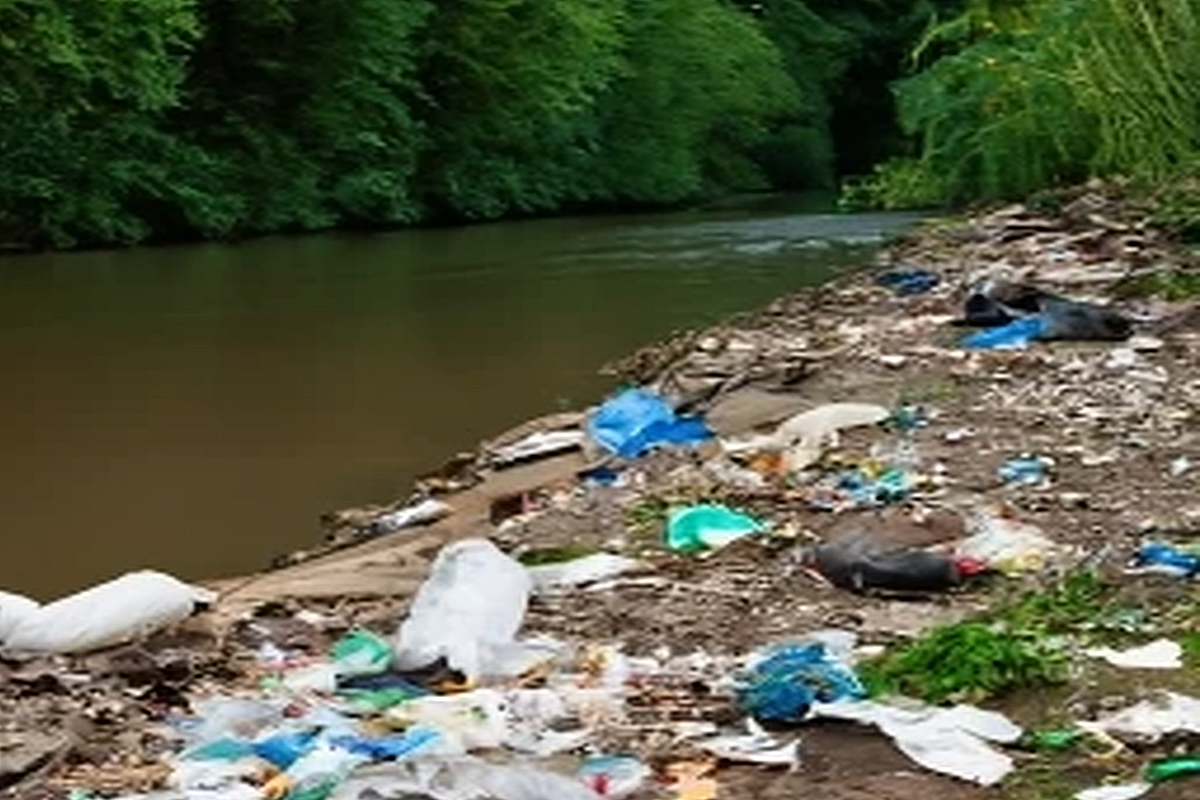
World environment day focused on plastic pollution

World Environment Day is celebrated every year around the globe to raise awareness of environmental issues and to encourage more responsible environmental protection. For 2025, the theme is “Solutions to Plastic Pollution”, and the host country will be Ivory Coast, specifically the city of Abidjan.

Pollution of rivers and lakes is a serious environmental problem in Serbia as well. Many watercourses are contaminated with plastic waste – from packaging, bags, and bottles, to microplastics that disrupt ecosystems and endanger both plant and animal life. Plastic from water sources enters the food chain, which in the long term has consequences for human health as well.

That is why one of the main goals of the national project “Clean Serbia” is not only the construction of modern utility infrastructure – sewage networks and wastewater treatment plants – but also raising public awareness of the importance of protecting nature and managing waste responsibly.

The project reminds us that the preservation of rivers, lakes, and groundwater is not a task completed solely by building pipelines and treatment plants, but also by changing behavior – from proper waste disposal to avoiding single-use plastics. The participation of local communities, educational institutions, and individuals is crucial to the success of these efforts.

In the context of this year’s global theme – “Solutions to Plastic Pollution” – it is important to emphasize that Serbia, through initiatives such as “Clean Serbia,” is taking concrete steps toward a healthier and more sustainable environment.


“Clean Serbia” preserves our lakes

Apart of preserving our rivers as a water resource and environmental protection, preservation of lakes in Serbia is also planned with the ’Clean Serbia’ Project.

There are around 150 lakes in Serbia which differ in their origin, size and location. They are an important factor in production of electricity in Serbia, a drinking water resource, protection from floods and are also significant tourist destinations.

Within the ‘Clean Serbia’ Project, not only the environments of cities and municipalities are being preserved, their rivers and Serbian spa resorts, but also rivers. With the implementation of the Project the following lakes will be preserved: Lake Vlasina, Gruža Lake, Bor Lake, Oblačinsko Lake, Lake Bovan, Lake Rovni and Zvornik Lake.

Lake pollution occurs with the discharge of pollutans, weather directly or indirectly. Pollutants Those pollutants affect the flora and fauna living in those water systems. Main pollutants, as research indicates, are in fact wastewaters, and construction of wastewater treatment plants is the only way, as is the case with rivers, to preserve the lakes.

GRUŽA LAKE

With the construction of a dam in 1981, the River Gruža, one of the longest and most water-rich rivers of Šumadija, was dammed. After the construction of a dam near the settlement of Pajsijevići, in the municipality of Knić, a multi-purpose reservoir was formed, the filling of which was completed in 1983. The primary function of this lake is a water supply to the Cities of Kragujevac, Kraljevo and the surrounding villages. Today, more than 300,000 citizens of the Republic of Serbia are supplied with water from this reservoir.

BOVAN LAKE

Bovan Lake is a lake located at Sokobanjska Moravica near Bovan between Sokobanja and Aleksinac. The lake is an artificial reservoir formed with the construction of a dam in 1978, in the regulation system of Morava River basin and the hydro power plant ‘Đerdap’ with the goal to retain sediments of hill and mountain rivers and to accumulate vast amounts of water at the same time.  It is 8 km long, 500m wide and 50m deep. Bovan Lake supplies the city of Aleksinac with water through the wastewater treatment plant.

ROVNI LAKE

Rovni is an artificial lake in Western Serbia, created by damming the Jablanica River and it is the most expensive facility of the Regional Water Management System ’Stubo-Rovni’. Pipeline 11,820 meters long supplies raw water to the wastewater treatment plant for the City of Valjevo.

BOR LAKE

Created in 1959 by damming the Brestovačka River, raising the dam and accumulating the water of Valja and Žoni streamlets, Marecova River and part of Zlot River basin. It covers a surface area of 30 hectares, and the depth of water reaches up to 48 meters. The water is mainly intended for mining and industrial facilities in Bor, but it also facilitates the development of tourism.

OBLAČINSKO LAKE

Oblačinsko Lake is a natural lake in South-Eastern Serbia, twenty or so kilometers West from Niš, near Mali Jastrebac. The lake covers a surface area of around 23 hectares. It originated in the early sixties of the last century when the dried up Oblačinska swamp turned into a lake. In 1965, a motel and an earth dam were constructed, and the bed of the former swamp surface was deepened, filled with water and stocked with fish. It has an extraordinary tourist potential.

LAKE VLASINA

Lake Vlasina is a reservoir lake in South-Eastern Serbia with the surface area of 15 km² and depth of up to 35 m. It is located on the territory of the Municipality of Surdulica, at 1,204 m (middle level) above the sea level. What is especially interesting and specific about this lake are about a hundred turf islands floating on its surface. Beautiful nature makes up the surrounding of this lake, and what is specific and stands out as a tourist attraction is fishing.

ZVORNIK LAKE

Zvornik Lake is an artificial lake on the Drina River, on the border stretching across the primal river flow, between the Republic of Serbia and Republic of Srpska in Bosnia and Herzegovina. The lake extends upstream through the Drina canyon from Zvornik and Mali Zvornik, up to the confluence of Velika reka streamlet in the village of the same name of the Mali Zvornik Municipality. This artificial lake was made with the construction of the hydroelectric power plant “Zvornik” which began in 1948, and the lake basin was filled with water in 1955. The dam is 45 meters high. Zvornik lake is the first artificial reservoir on the Drina River.