
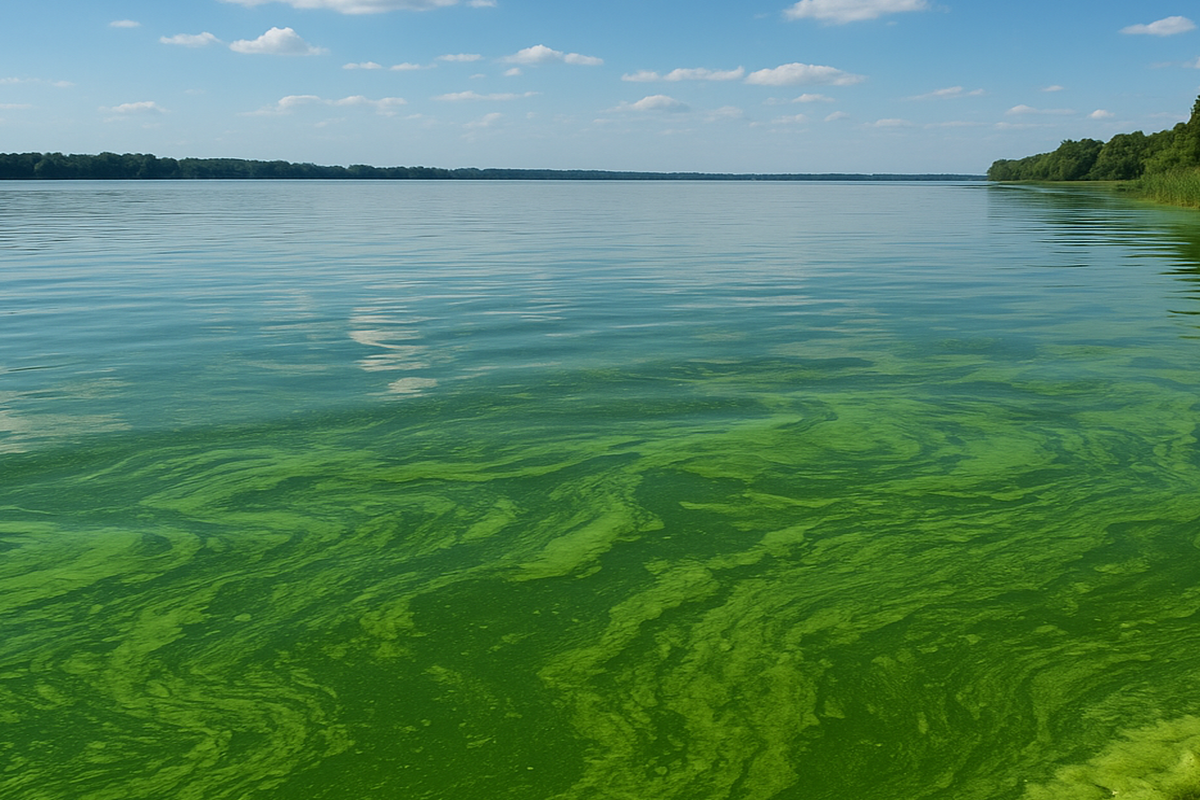
In some lakes and rivers in Serbia, the process of eutrophication is evident. This process occurs most often due to the absence of sewage systems and wastewater treatment processes.
Eutrophication occurs when water becomes overly enriched with nutrients, primarily nitrogen and phosphorus. These nutrients come from:
• Wastewater (domestic and industrial)
• Agricultural fertilizers (runoff from fields)
• Detergents and other chemicals
This process manifests as excessive growth of algae and aquatic plants (so-called “algal blooms”), a decrease in oxygen levels in the water when algae die and begin to decompose, the appearance of unpleasant odors, and turbid water.
The consequences of eutrophication are: the death of fish and other aquatic organisms due to lack of oxygen, reduction of biodiversity (variety of species), changes in the chemical composition of water, which makes its use for drinking, recreation, or irrigation more difficult.
According to available information, lakes with evident eutrophication in Serbia include Palić and Ludaš, Međuvršje, the Zobnatica reservoir, and some others.
The United Nations Environment Programme (UNEP), which studies challenges related to phosphorus pollution and its impacts on biodiversity and ecosystems, particularly highlights eutrophication of aquatic systems as a growing problem. “Globally, phosphorus losses from land to freshwater have doubled in the last century and continue to rise. Despite significant efforts to reduce nutrient pollution,” the program states.
Phosphorus was discovered more than 350 years ago and is an essential nutrient that helps plants grow. Its primary use is in the production of synthetic fertilizers to increase crop yields, making it crucial for food security. Phosphorus is also a key component of animal feed and is used in steel production, food additives, batteries for electric vehicles, certain pesticides, and household cleaning products.
The UN does not rule out the continued use of phosphorus but emphasizes that the key is to use it more sustainably and prevent excessive amounts from entering the environment.
“Wastewater releases about 3 million tons of phosphorus into the environment worldwide each year. Proper treatment could reduce phosphorus and nitrogen concentrations in wastewater by at least 80%. Solutions will require innovations—not only in technology but also in operational methods and cooperation between sectors that have traditionally not collaborated,” states the UNEP website.