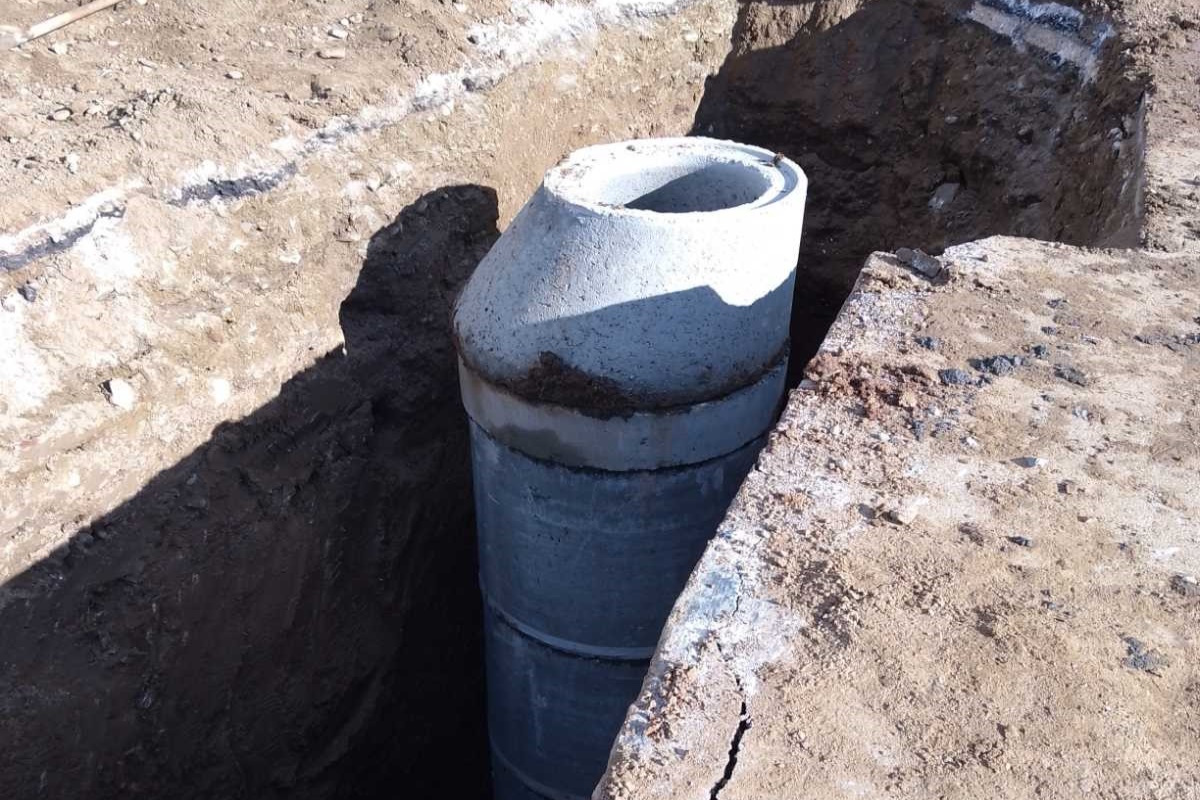
The global challenge in wastewater treatment technologies

One of the key challenges in modern wastewater treatment technologies is the increasing presence of solid materials in wastewater, dirty, and surface waters. Among the most problematic are wet wipes and similar non-biodegradable materials, which entangle into “knots” and form braids, leading to pump blockages and equipment damage.

Wastewater management experts around the world are warning of a drastic increase in the amount of non-degradable materials in sewer systems. In urban areas, especially in large cities, these materials, combined with fats, create large solid masses known as fatbergs. These can weigh several tons and often cause severe blockages in sewer pipes.

The consequences of sewer blockages include:

  • Blockages of pumps and pipes – the so-called “ragging problem,” where solid materials entangle and hinder pump operation.
  • Damage to equipment – increased wear of pumps, motors, and filtration systems.
  • Increased maintenance costs – due to frequent manual cleaning, repairs, and part replacements.
  • Increased risk of breakdowns – blockages can lead to sewage overflows and serious environmental issues.

To address this growing challenge, many countries, including Germany, the Netherlands, and Scandinavian nations, are implementing advanced technical solutions:

Germany: Vogelsang XRipper
The company Vogelsang has developed XRipper, a dual-shaft grinder designed to shred solid materials such as wet wipes, textiles, and other waste in sewage systems. This device protects pumps and pipes from clogging and damage, reducing the need for frequent interventions and maintenance.

Netherlands: Flygt Concertor in Rotterdam
In Rotterdam, a sewage station was frequently experiencing clogs due to wet wipes. In response, city authorities implemented the Flygt Concertor, an intelligent pump system that automatically adapts its performance to the wastewater composition. The results were immediate – clogs were eliminated, and maintenance costs significantly reduced.

The introduction of such modern systems is becoming increasingly important to preserve the functionality of facilities, reduce costs, and protect the environment.

photo:AI

“Clean Serbia” as a key part of EXPO 2027

The Clean Serbia project, which involves the construction of sewage networks and wastewater treatment plants across the country, has been highlighted as one of the key infrastructure undertakings in preparation for EXPO 2027. Serbia’s First Deputy Prime Minister and Minister of Finance in a technical mandate, Siniša Mali, stated that the total value of the EXPO project will reach an impressive 18 billion euros, encompassing 323 infrastructure projects throughout Serbia.

Clean Serbia plays a crucial role in improving environmental protection and raising the quality of life for citizens. The project aims to address one of the most pressing ecological issues—lack of adequate sewage infrastructure and wastewater treatment in many municipalities.

Mali emphasized that, in addition to Clean Serbia, the EXPO development plan also includes projects in the fields of transportation (both water and air), energy, tourism, education, and innovation. Among them are the Kostolac B3 thermal power plant, the Kostolac wind farm, the Serbia–Hungary oil pipeline, the expansion of the Banatski Dvor gas storage facility, irrigation systems, the BIO 4 Campus, the Innovation District, the expansion of the Data Center in Kragujevac, as well as the construction of student and dormitory housing, training centers, and projects related to integrated regional development and tourism.

A special place in this comprehensive investment wave is occupied by Clean Serbia, whose implementation not only contributes to environmental sustainability and public health but also paves the way for Serbia to align with European environmental standards.

“Clean Serbia” in Varvarin: Preparations for paving underway

The construction of the sewage network in the Municipality of Varvarin is entering its final phase. After the installation of sewage pipes, street paving will follow.

Nemanja Čolić, Assistant to the President of the Municipality of Varvarin, stated that preparations for asphalt paving are in progress.

“Preparations are underway to pave 510 meters of Nikola Tesla Street and 370 meters of Aleksandar Ranković Street in the village of Varvarin. The project includes the construction of 45 kilometers of sewage network,” Čolić told KruševacGrad, adding that work on the construction of a wastewater treatment separator is also in progress.

At the same time, in Obrež, the paving of Sava Kovačević Street, approximately 550 meters long, has been completed, providing the street with full communal infrastructure.

Councilor Slobodan Simić, who visited the construction site, emphasized that the implementation of the “Clean Serbia” project is of great importance to the local residents.

“The implementation of the project will significantly improve the quality of life,” Simić said.

World water day: Global and local perspectives

World Water Day is celebrated every year on March 22, and the theme for 2025, announced by the United Nations, focuses on glacier protection. The UN emphasizes that glaciers are crucial for preserving life, as their melted water provides drinking water, supports agriculture, industry, clean energy production, and ecosystem preservation. This year’s theme aims to raise awareness about the rapid melting of glaciers due to climate change, which threatens global water supply and disrupts natural balance.

Glaciers account for approximately 69% of the planet’s freshwater, and their melted water directly affects ecosystems, rivers, and lakes worldwide. However, in Serbia, despite having significant water resources, the country faces challenges in maintaining water quality and availability. The quality of water in Serbia’s rivers varies, but many are heavily polluted due to the discharge of untreated industrial and municipal wastewater, as well as agricultural pollution, including pesticides and artificial fertilizers.

In the last six months, 65 locations in Serbia have faced water shortages, highlighting the concerning state of water resource management. The causes of this issue include the drying up of springs, rivers, and lakes, leaving many areas without water for drinking, agriculture, and basic daily needs.

Serbia is actively working on addressing the problems of sewage and wastewater treatment through the “Clean Serbia” project. This project aims to improve the ecological protection of water and land, which will enhance the quality of life for around 2.5 million residents in the affected municipalities.

Approved land plot for wastewater treatment plant construction

The Sombor City Council has decided to transfer land plots for the construction of a wastewater treatment plant as part of the “Clean Serbia” project.

The City Council of Sombor has approved the transfer of the necessary land plots for the construction of the wastewater treatment plant, enabling further implementation of the “Clean Serbia” project.

As reported by Vojvodina Uživo, during the City Council session, a proposal was adopted for the transfer of public property on cadastral parcel 7047 K.O. Bezdan, free of charge. This parcel, designated in planning documents for the construction of a wastewater treatment plant, is being transferred from the public ownership of the Republic of Serbia to the public ownership of the City of Sombor.

The “Clean Serbia” project plays a key role in improving communal infrastructure by facilitating the construction of a modern sewage network and wastewater treatment system. As part of this project, work is currently underway on the construction of a wastewater treatment network in Sombor and the surrounding settlements of Bezdan, Kolut, Bački Breg, Stanišić, Kljajićevo, and Doroslovo.

Chinese ambassador: „Clean Serbia“ project improves water treatment

The Chinese ambassador to Serbia, Li Ming, stated in an interview with Tanjug that the two countries have excellent potential and strong cooperation, particularly in infrastructure, high technology, and environmental protection.

“Chinese companies are building bridges on the Danube in Novi Sad, and some Chinese firms have taken over the implementation of the ‘Clean Serbia’ project, which aims to improve water treatment across the country,” Ambassador Li said.

He emphasized that cooperation between Serbia and China is expanding into renewable energy, biotechnology, and other high-tech sectors.

“We have great potential for further strengthening our relations, and our task is to work closely together to turn this potential into reality,” concluded the Chinese ambassador.

“Clean Serbia” – Solution for Aleksinac sewer network

The municipality of Aleksinac may soon receive a modern sewer network and a wastewater treatment plant as part of the national program Clean Serbia. The estimated cost of the project is around 40 million euros, significantly exceeding the annual municipal budget, so it will be funded by the state.

Municipal president Dalibor Radičević told Alpress that the project has been in development for two years and that key preparations have been completed:

“The conditions have been met for the construction of 70 kilometers of sewer network in Žitkovac and the surrounding settlements. Building permits have been obtained, and land expropriation has been completed, which was our responsibility. Now, we are waiting for the designer, appointed by the ‘Clean Serbia’ program, to finalize the documentation for the wastewater treatment plant.”

He added that the municipality of Aleksinac would not be able to carry out such a large project on its own:

“If we relied solely on the local budget, we wouldn’t even be able to finance one-third of the planned work. The exact cost will be known once the design is completed and all permits are obtained for the part of Aleksinac on the right bank of the Južna Morava River.”

Construction is expected to begin this year, but a level of caution remains, considering past experiences with projects that were left unrealized.

The sewer works are underway in Pojat, followed by Stalać and Ćićevac

As part of the implementation of the “Clean Serbia” project in the municipality of Ćićevac, excavation and pipe installation are currently underway in several streets in Pojat, and the mayor of the municipality, Dr. Mirjana Krkić, announced that after Pojat, the work will move to Grad Stalać, while the final phase will cover Ćićevac itself.

“This year, the plan is to construct 30 kilometers of the sewage network. I urge the citizens to be patient during the ongoing work, as the ‘Clean Serbia’ project is of great importance and requires both time and cooperation from everyone. With the arrival of spring, along with agricultural work, there may be temporary infrastructure damage, such as cut asphalt. However, all streets will be restored to their original condition after the completion of the work,” said Dr. Mirjana Krkić.

The “Clean Serbia” project covers the construction of 61 kilometers of sewage network in the territory of the municipality of Ćićevac.

Mićin: Continuation of the ‘Clean Serbia’ project in Novi Sad

The newly elected mayor of Novi Sad, Žarko Mićin, in a statement to the Novi Sad media, spoke about the general development and progress of the city, emphasizing that one of the key goals is the continuation of infrastructure projects. Among those projects, “Clean Serbia” certainly stands out.

As he stated in his presentation, Mićin reiterated that the focus will be on the implementation of key infrastructure initiatives, including the “Clean Serbia” project.

“Through the ‘Clean Serbia’ project, the sewage system at Liman 1 and 2 will be reconstructed, a collector will be built along Cara Lazar Boulevard, and a new sewer system will be installed at Dunavac. “Also, the reconstruction of the waste water collector is planned in Almaška Street, from Pariska Komuna Street to Kisačka Street, as well as in Miša Dimitrijevića Street,” Mićin said.

He reminded that in the period from 2012 to 2024, more than 300 kilometers of water supply network were built and reconstructed, as well as almost 350 kilometers of sewage network.

“Novi Sad, thanks to the large infrastructure projects that are being implemented, will continue to grow and develop, in accordance with the needs of its citizens,” Mićin concluded.

Works within the “Clean Serbia” are running smoothly in Kragujevac

Works within the “Clean Serbia” project in Kragujevac are proceeding smoothly. Currently, the construction of the missing sewage line, arrangement of manholes in Milivoja Milentijevića Street, preparation for asphalting in Užička Republika Street, and excavations in Dragoljuba Dulejanovića, Nikola Maratovića and Velebitska Streets are in progress. The works aimed at improving the infrastructure and improving the quality of life of the residents are progressing according to the planned dynamics.