Sombor: Preparation of environmental impact study

The City of Sombor has submitted a request for an environmental impact assessment for the construction of a sewage network and a wastewater treatment plant in Stanišić, as part of the “Clean Serbia” project, Dnevnik reports.

“Considering that the planned works include the reconstruction of streets, in the area of Cara Lazara Street, with a length of 1,700 meters, the construction of a new sewage network with about 420 household connections, as well as 9 kilometers of accompanying sewage network and one pumping station, is planned. The construction will be carried out in phases. The first phase covers Cara Lazara Street with a length of 1,700 meters and the construction of a pumping station. The second phase, which refers to the continuation of the network construction, includes about 420 household connections,” the documentation states.

According to the report, the environment will not be endangered, as wastewater will be directed to treatment facilities, eliminating the possibility of deterioration of recognizable environmental elements.

“Since in part of Cara Lazara Street, from house number 212, it was not possible to connect those parts of the settlement to the vacuum sewage system, a classic gravitational drainage system with one pumping station is planned for this area. The shaft-type pumping station, located at the end of Cara Lazara Street, will transfer the water to a shaft in Oslobođenja Street, at house number 196, where the wastewater will be introduced into the vacuum sewage system,” the submitted request states.

The public and interested organizations may submit their opinions and suggestions within the prescribed procedure, Dnevnik reports.

UN SDG – Progress in the treatment of domestic wastewater

According to the latest data from the United Nations Sustainable Development Goals (UN SDG), approximately 56% of domestic wastewater worldwide was safely treated in 2024, meaning it underwent at least secondary treatment in accordance with national or local standards. This data covers about 92% of the global domestic wastewater flow and includes more than 140 countries and territories.

In 2022, it was recorded that out of a total of 268 billion cubic meters of generated domestic wastewater, around 155 billion cubic meters were safely treated before being discharged into the environment. However, a significant portion, about 44%, still did not undergo adequate treatment, posing a serious challenge for water quality preservation and environmental protection.

These data highlight the importance of further investment and accelerated efforts in building and modernizing wastewater collection and treatment systems, especially in countries with underdeveloped infrastructure. Projects such as “Clean Serbia” contribute to this global goal by modernizing local utility networks and raising environmental protection standards.

Further progress in wastewater treatment is crucial to achieving UN SDG Target 6.3, which aims by 2030 to significantly reduce pollution, eliminate the discharge of untreated wastewater, and increase recycling and safe reuse of water globally.

Clean Serbia – Works progressing in Kučevo

Extensive works are underway in the municipality of Kučevo as part of the “Clean Serbia” project. In the town itself, construction of the main collector, as well as the water supply and sewerage network in the lower part of the settlement, is nearing completion, which will significantly improve municipal infrastructure and the quality of life for residents. Once these works are finished, road infrastructure will be renovated, followed by the reconstruction of five streets.

Works are also being carried out in other settlements within the municipality, ensuring balanced development and better connectivity between local communities. The “Clean Serbia” project has long-term importance for Kučevo, as it not only modernizes utility networks but also contributes to environmental protection, which is particularly important for rural areas that have seen an increasing number of families returning in recent years.

Inđija: 15 km of sewer network for Beška

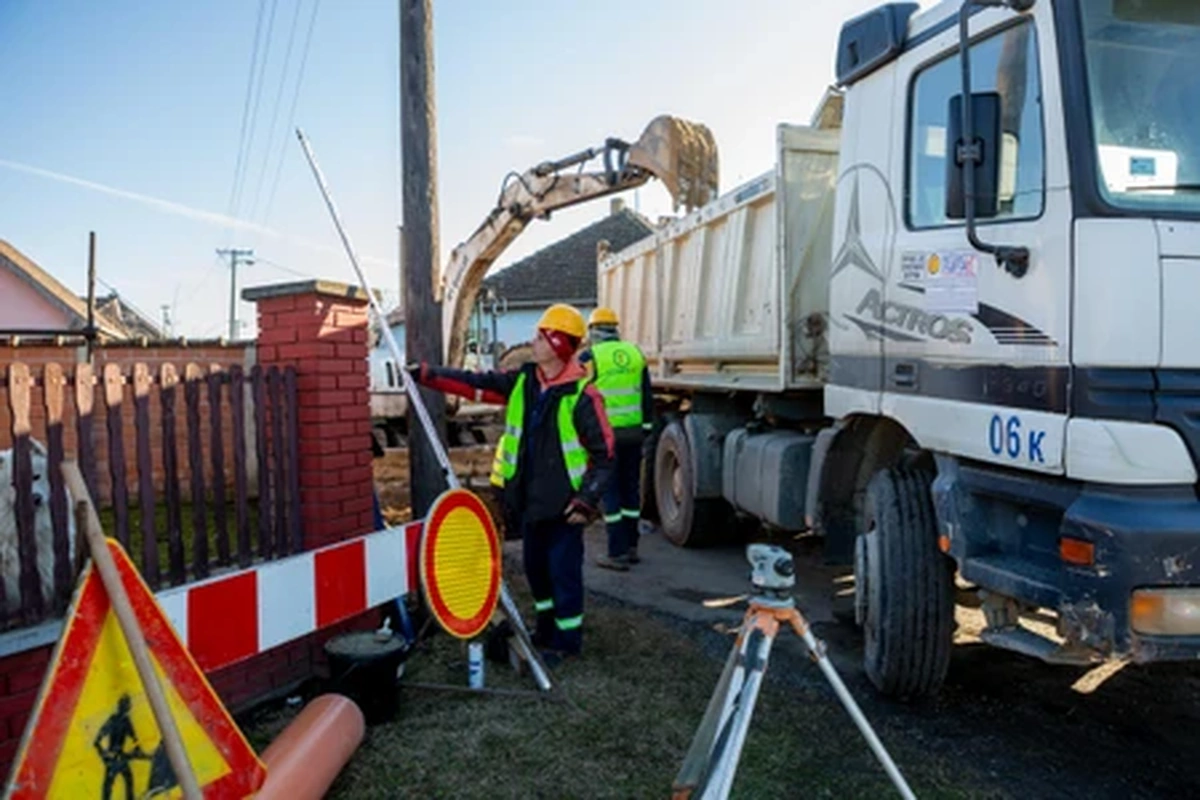
The “Clean Serbia” project is currently being implemented in Beška, within which a sewer network will be constructed in both Inđija and Beška. Around 90 percent of the streets in Beška will be connected to the sewer system.

In the Municipality of Inđija, works are currently underway in the local community of Beška, with a total value of 15 million euros, involving the construction of 15 kilometers of sewer network.

The President of the Municipality, Marko Gašić, during a site visit, emphasized that construction is taking place at three locations.
“In Mlinska Street, Kralja Petra Prvog Street, and Branka Radičevića Street. By the end of the project, around 90 percent of the streets in Beška will be covered by the sewer network, totaling approximately 15 kilometers,” said Gašić.

As announced during the visit, the first phase of construction is expected to be completed in about a year, after which the installation of household connections will follow. The local government will provide the necessary funds for these connections.

The construction of the sewer network in Beška is expected to significantly resolve many long-standing problems in this local community, as the latest data shows that only ten percent of households in Beška are currently connected to the sewer system.

Subotica: Construction work in Čantavir to begin soon

The City of Subotica is reconstructing the water tower in Čantavir, while simultaneously implementing the “Clean Serbia” project.
Deputy Mayor of Subotica, Csilla Goli, emphasized at the start of the water tower reconstruction that, in addition to the water supply, the works within the “Clean Serbia” project are also of great importance for the city.
“Construction of a sewage network is underway in several local communities as part of the Clean Serbia program. We also expect work to begin in this local community – a sewage network of 25 kilometers is planned in Čantavir, along with a wastewater treatment plant,” Goli announced.
These works are expected to improve the communal infrastructure and contribute to a better quality of life for the residents of Čantavir.

Clean Serbia: Intensive Sewer Works Underway in Bajmok Settlement

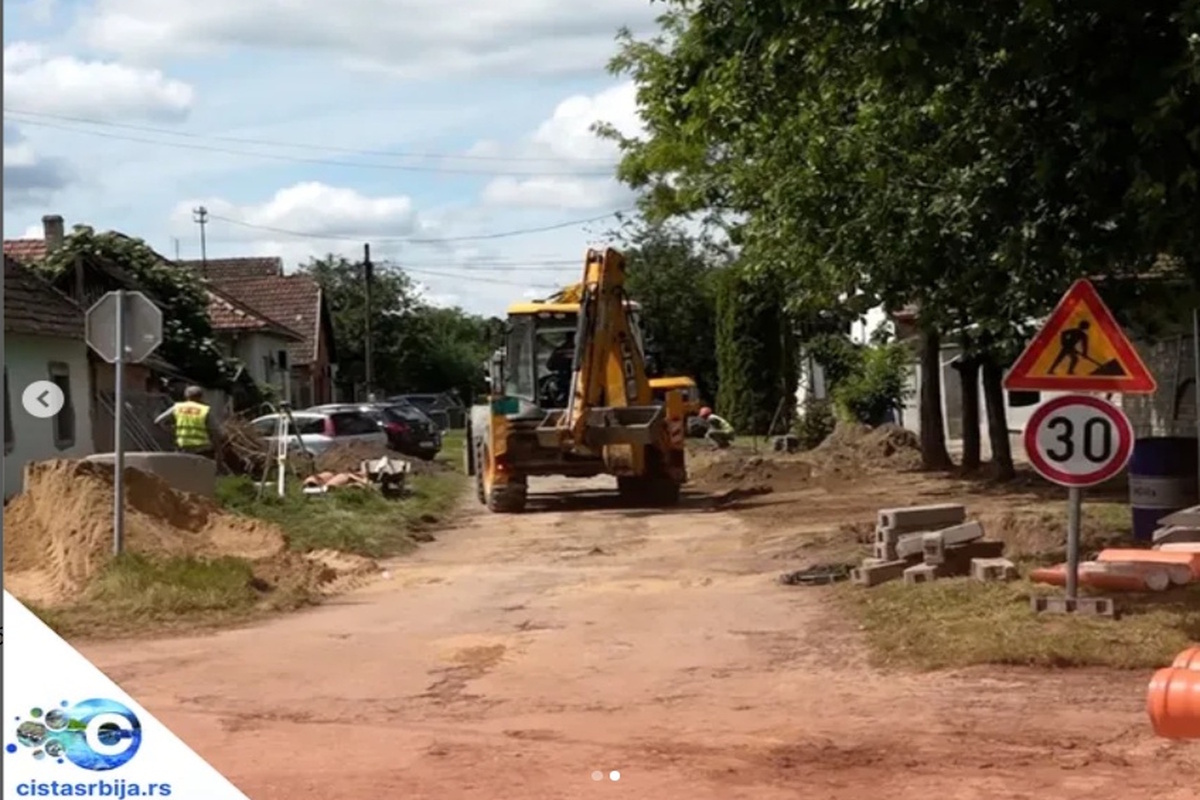
Work on the “Clean Serbia” project is progressing intensively in the settlement of Bajmok – sewer pipes have been installed in several streets, and construction is currently ongoing on Rata Street and the road toward Pačir.

Machinery arrived in Bajmok in February, and the works began in the center of the settlement. So far, approximately 4,000 meters of the planned 26-kilometer network have been completed.

Documentation for the wastewater treatment plants in Bajmok and Čantavir is currently being prepared. The project focuses on environmental protection of water and soil, including the construction of a sewer network and wastewater treatment facilities, as well as the rehabilitation and development of municipal solid waste management centers.

Clean Serbia: Asphalt Works in the Municipality of Varvarin

Works on the renovation and improvement of infrastructure within the national project “Clean Serbia” in the municipality of Varvarin are entering their final phase. In the village of Varvarin, 510 meters of Nikola Tesla Street and 370 meters of Aleksandar Ranković Street have been asphalted, marking a significant step toward improving the local road network.

This project includes the construction of 45 kilometers of a sewage network, which will significantly enhance the municipal infrastructure and living conditions in the Varvarin municipality. Construction of a wastewater treatment separator is also underway, which will contribute to better environmental protection and ecological sustainability.

The local government extends its gratitude to residents for their understanding and patience during the implementation of the works, emphasizing that the “Clean Serbia” project is of great importance for the future development of the municipality and the improvement of the quality of municipal infrastructure.

The “Clean Serbia” project in the mayor of Vranje’s report

In his annual report, the Mayor of Vranje, Slobodan Milenković, listed numerous infrastructure projects, including the “Clean Serbia” initiative.
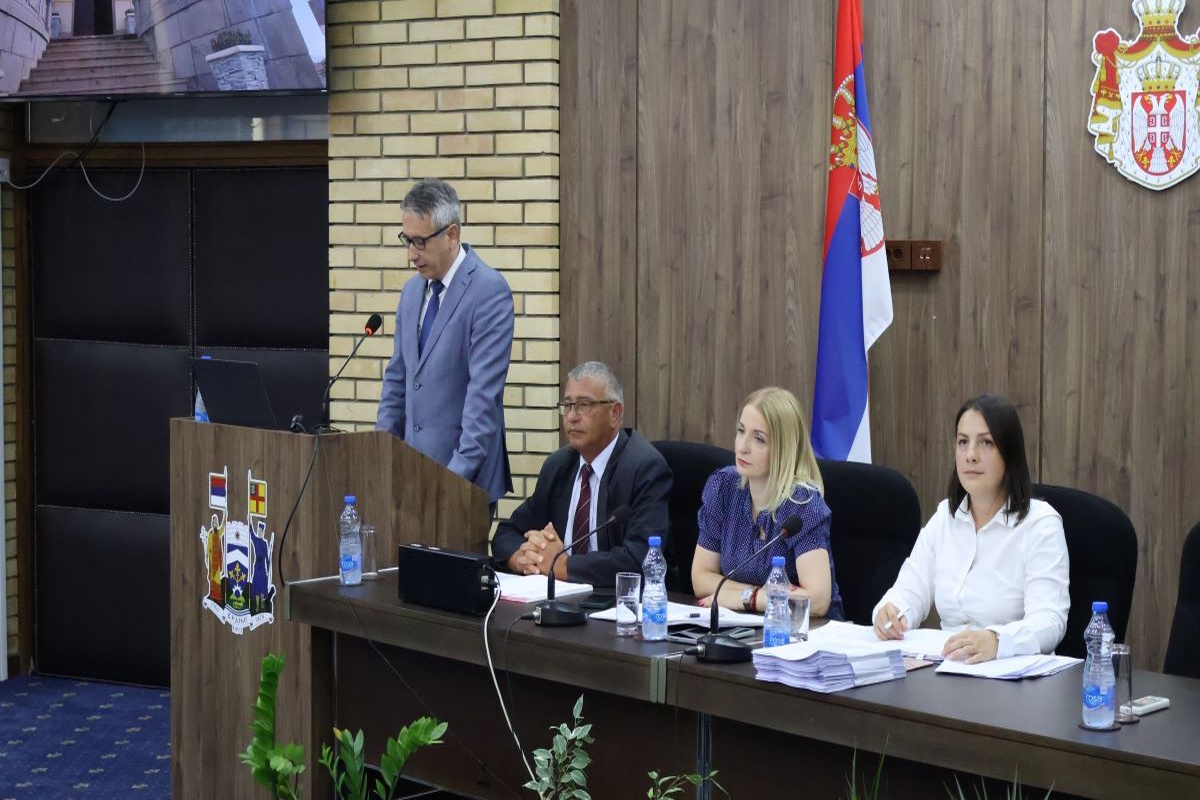
At the 13th session of the City Assembly, chaired by Zorica Jović, the reports on the work of the Mayor and the City Council for the year 2024 were reviewed and adopted. These reports were presented by Dr. Slobodan Milenković, Mayor of Vranje.
“The construction and reconstruction of the water supply and sewage network continued, and as part of the ‘Clean Serbia’ project, in cooperation with the Ministry of Construction, Transport and Infrastructure, work progressed and communal sewage infrastructure was built in many streets, both in urban areas and rural communities,” stated Milenković in the report.
The report highlighted that the works covered both urban and rural areas.

photo: City of Vranje

World environment day focused on plastic pollution

World Environment Day is celebrated every year around the globe to raise awareness of environmental issues and to encourage more responsible environmental protection. For 2025, the theme is “Solutions to Plastic Pollution”, and the host country will be Ivory Coast, specifically the city of Abidjan.

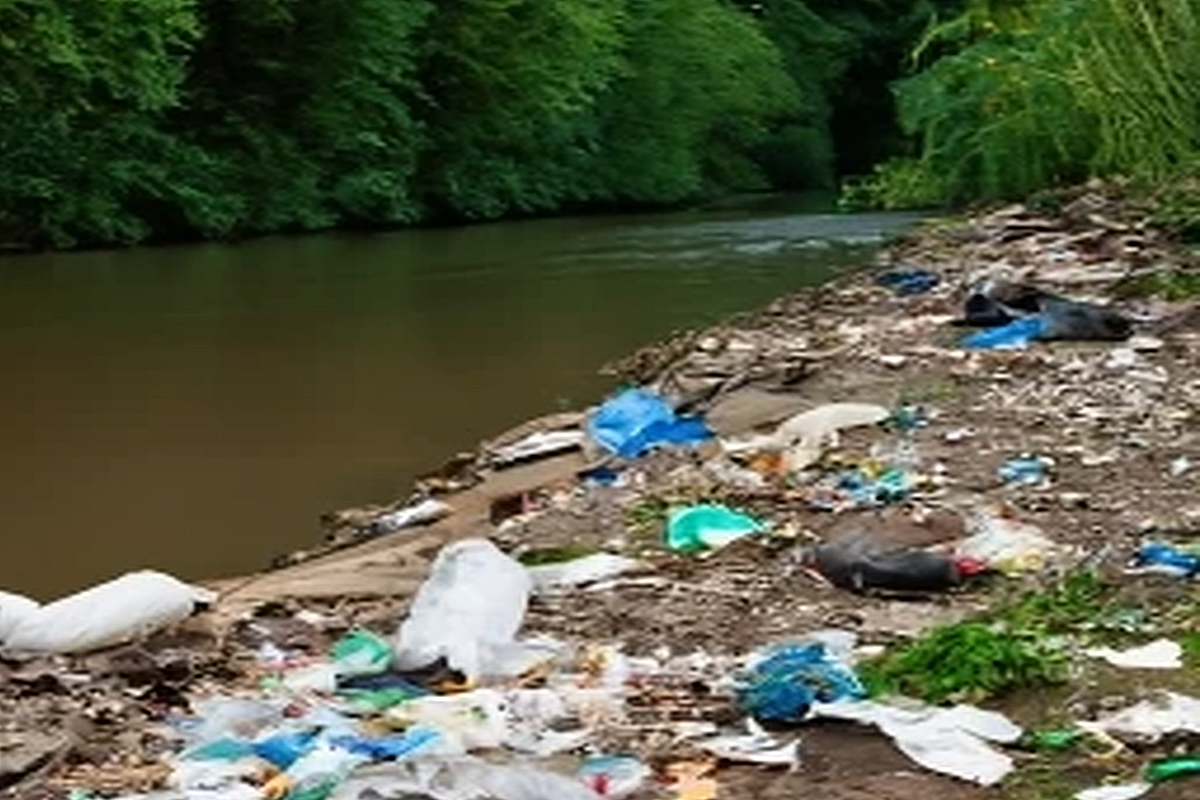
Pollution of rivers and lakes is a serious environmental problem in Serbia as well. Many watercourses are contaminated with plastic waste – from packaging, bags, and bottles, to microplastics that disrupt ecosystems and endanger both plant and animal life. Plastic from water sources enters the food chain, which in the long term has consequences for human health as well.

That is why one of the main goals of the national project “Clean Serbia” is not only the construction of modern utility infrastructure – sewage networks and wastewater treatment plants – but also raising public awareness of the importance of protecting nature and managing waste responsibly.

The project reminds us that the preservation of rivers, lakes, and groundwater is not a task completed solely by building pipelines and treatment plants, but also by changing behavior – from proper waste disposal to avoiding single-use plastics. The participation of local communities, educational institutions, and individuals is crucial to the success of these efforts.

In the context of this year’s global theme – “Solutions to Plastic Pollution” – it is important to emphasize that Serbia, through initiatives such as “Clean Serbia,” is taking concrete steps toward a healthier and more sustainable environment.


Clean Serbia: Works in the willage of Varvarin in final phase

Important infrastructure works are currently underway in the village of Varvarin, aiming to improve living conditions and enhance municipal infrastructure. A total of 880 meters of road has been paved—510 meters in Nikola Tesla Street and 370 meters in Aleksandar Ranković Street, reports krusevacgrad.rs.

In addition to road infrastructure improvements, the municipality of Varvarin is also implementing the construction of a 45-kilometer-long sewage network, as well as the installation of a wastewater treatment separator. These projects are part of a broader initiative focused on environmental protection and the improvement of sanitary conditions.

The works were visited by the President of the Municipality, Dr. Violeta Lutovac Đurđević, her Deputy Aleksandar Pavić, and Assistant Nemanja Čolić, who stated that once the sewage network is completed, all streets damaged during the construction will be fully reconstructed, and regional roads will also be addressed.