Friendship Caravan on the Silk Road – Chinese New Year

The Government of the Republic of Serbia, the Embassy of the Republic of China in Belgrade and the Belt and Road Institute in cooperation with the cities of Belgrade, Novi Sad, Niš, Bor and Smederevo are organizing the Chinese New Year celebration in the Republic of Serbia from January 21 to 26, 2023. All the collected funds will be directed to charity.

The opening of the manifestation began yesterday at 5 pm in Belgrade, on Kalemegdan, in the presence of high-ranking officials of the Republic of Serbia, the Embassy of the People’s Republic of China and the city of Belgrade with spectacular fireworks. Officials will revive the traditional dance of the Lion Game, which will lead the crowd through Knez Mihajlova Street to Republic Square, where the Festival of Tastes of the Belt and Road, which has a humanitarian character, will be held. The celebration in Belgrade will continue on Sunday, January 22, from 12:00 p.m. to 6:00 p.m.

Apart from Belgrade, the Chinese New Year will also be celebrated in Bor (January 23), Novi Sad (January 24), Smederevo (January 25) and Nis (January 26), everywhere starting at 5 p.m. where until 9 p.m. to be able to take part in a humanitarian action and try the specialties of several countries of the Belt and Road, but also to enjoy the Lion Game, the performance of martial arts and the performance of Cuđu (Ancient Chinese

football).

All contents and the prepared program reflect the friendship of the people of the People’s Republic of China and the Republic of Serbia in the traditional celebration of the Chinese New Year, but in addition, it will bring the idea and comprehensive approach to the great initiative Belt and Road closer to all visitors, by presenting data and facts about the implementation of the initiative.

The Government of the Republic of Serbia hereby invites all citizens to come to celebrate the Lunar New Year in their local governments or those closest to them and have fun, learn something new and get acquainted with Chinese traditions. In addition, a pavilion will be set up in the premises of the official celebration where artists who work with handicrafts will show their skills and craftsmanship. This humanitarian caravan flavors and gifts of friendship, such as a small square from a fairy tale where you can find food and other products, for a charity contribution of 200 dinars, guests will be given the opportunity to receive a meal and a non-alcoholic drink from one of the cuisines of the member countries of the Belt and Road initiative, and for the same the minimum amount and to be tested in the humanitarian knowledge quiz for which prizes have been prepared. At the same time, everyone who participates in the quiz knowledge will also be able to participate in a prize competition that will be jointly prepared by the Belt and Road Institute and the Chinese Cultural Center, where the main prizes will be two round-trip airline tickets on direct flights to China!

All the revenue collected at the Friendship Caravan on the Belt and Road is intended to be directed to humanitarian purposes, namely in Belgrade – Center for accommodation and daycare for children and youth with developmental disabilities, in Novi Sad – Red Cross, in Smederevo – Red Cross – soup kitchen, in Niš – Center for the provision of social welfare services “Mara” Niš and in Bor – General Hospital Bor, children’s department, and the remaining food will be donated to the Food Bank, according to the announcement.

Investments in Vrbas and through the “Clean Serbia” project

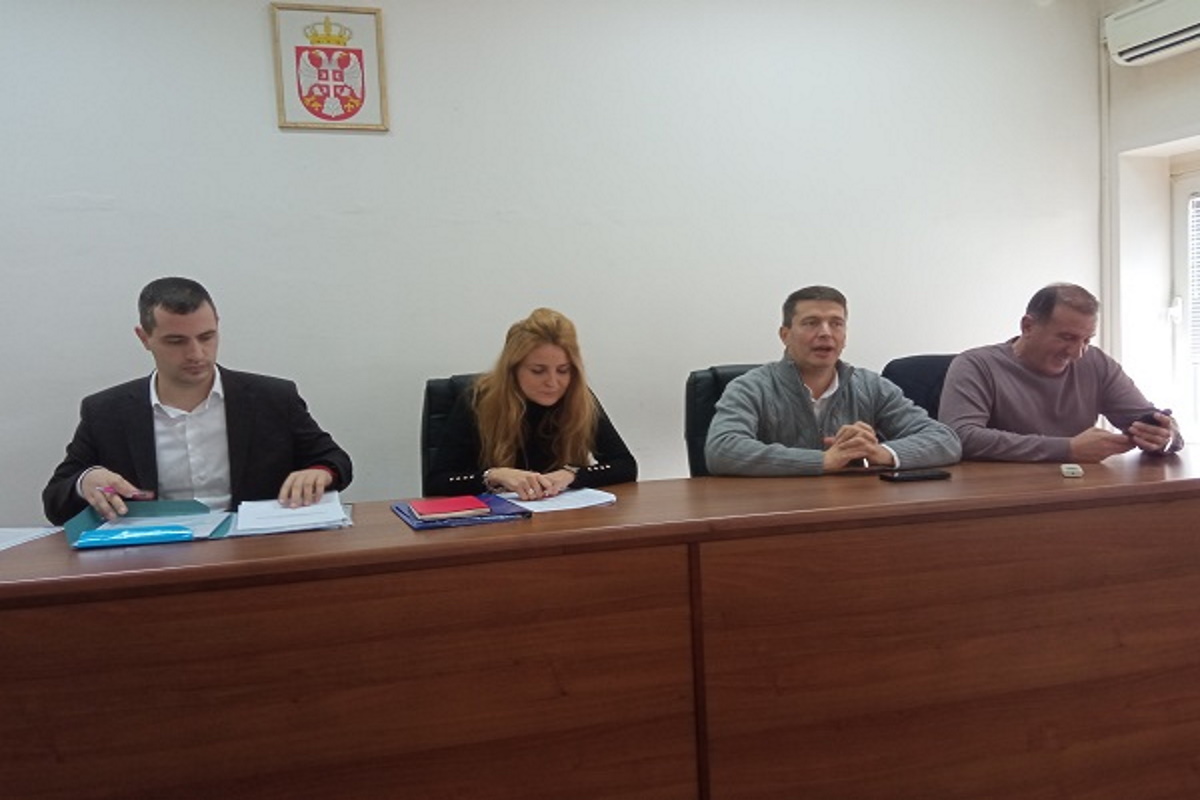
At a meeting in Vrbas, the Minister of Construction and Transport Goran Vesić, announced investments in this municipality through the “Clean Serbia” project.

“I will try to find places for this project in the Clean Serbia program by the end of this year. This is important because of the increase in the efficiency of the central wastewater treatment plant”, said Minister Goran Vesić at a meeting with the management of the Municipality of Vrbas.

“At the request of the municipal leadership, the Ministry of Construction, Transport and Infrastructure will help in the construction of sewers in several places in Vrbas, and through the Clean Serbia project because they do not require large money”, Vesić added.

The minister also emphasized that through “Clean Serbia” in Vojvodina, in the second and third phase, work is being done on many projects, in Sombor, Subotica, Novi Sad, Stara Pazova, Inđija, Sremska Mitrovica, Ada…

Photo: Municipality of Vrbas

“Clean Serbia” is changing Serbia’s attitude towards its waters

The United Nations once warned that by 2050, as many as 5.7 billion people could live in areas where there is not enough water. Rivers in Serbia are mostly polluted by municipal water and industrial plants.

Having clean, healthy drinking water in the era of industrialization and technological progress is the interest of every nation. Serbia has a significant interest in preserving its river courses. Unfortunately, a common picture is their pollution, whether it is directly thrown waste, most often plastic that takes hundreds of years to decompose, but also municipal water from the settlement. To all this, we should add the fact that many industrial plants in Serbia do not have their own wastewater treatment plants, so the polluted water from their plants reach our rivers untreated.

Due to all of the above, it is not surprising that the data show that most of the rivers in Serbia belong to the second and third class, while to the first belong smaller mountain watercourses and the upper reaches of certain rivers with clean water, and to the fourth “highly polluted water”.

As examples of the most polluted waters in Serbia, the Danube-Tisa-Danube canal in Vojvodina is often singled out, especially the Veliki Bački canal and the Bor river that flows into the Timok. The Bor River is cited as one of the most polluted Serbian and European rivers, which many people call it “a dead river”. “There are no traces of life left in it, and due to high pollution, it does not belong to any class”, according to the available data.

The uncontrolled discharge of polluted water into our rivers also disturbs the underground water system, the recovery of which requires significantly more time. Water pollution also affects the quality of the soil and thus the quality of agricultural production, of all those products which are significant for human life.

Communal water from households in Serbia often reaches the rivers untreated, first of all the municipal water flows into the immediate contamination of the land surrounding the settlement and then it also reaches the rivers where they affect the change in the biodiversity of the river course.

The available data show that there are 36 wastewater treatment plants in Serbia, but realistically, much more are necessary to preserve the natural environment and the healthy life of people.

Water is a key resource for sustaining life on Earth, and for example, according to the research of the Institute for Public Health of Serbia “Dr. Milan Jovanović Batut” conducted in 2018, out of 42 controlled public water supply systems in Vojvodina, only nine were correct.

That is why Serbia is trying to change this image. The “Clean Serbia” project aims to preserve the natural environment and preserve our rivers. Hundreds of kilometers of already built utility networks, new contracts with cities and municipalities will enable Serbia to preserve its water wealth, and the citizens of Serbia to live a life worthy of a developed community.

“Clean Serbia” preserves the ecosystem and strives to keep the key life resource – drinking water – healthy. Every citizen can make his contribution by changing his attitude towards rivers, by disposing of garbage in designated places and not in rivers, avoid water pollution with chemicals that are difficult to process, use biodegradable products.

Together with “Clean Serbia” it is possible to take a step forward towards the quality of our waters.

Continuation of works in Zaječar in the spring

The mayor of Zaječar, Boško Ničić, announced in the spring the continuation of works on the construction of the sewage network as part of the “Clean Serbia” project.

“We managed, in a conversation with the Minister of Construction, Goran Vesić, to return Zaječar to the second group of projects within the framework of “Clean Serbia” and to continue work on 68 kilometers of the new sewage network already in the spring,” said Ničić, the mayor of Zaječar.

He stated that the works will first be started in Grljan, Višnjar settlement, which will connect settlements that previously did not have a sewage network. “Then we start from the direction of Zvezdan, and that is very important because it opens up space for us to pave the streets in all those settlements. Zaječar is part of the “Clean Serbia” project, in the framework of which, in addition to the sewage network, two collectors for purification will be built. Project documentation has already been prepared for all of this and the necessary permits have been obtained – we are ready,” said Ničić.

500 million euros will be provided for sewerage projects

“In 2023, the construction of the first factory for the processing of waste water, out of a total of five planned in Belgrade, will begin”, announced the Minister of Construction, Transport and Infrastructure Goran Vesić. As part of the “Clean Serbia” project, another 500 million euros will be provided for sewage projects and wastewater treatment plants.

The Minister of Construction, Transport and Infrastructure, Goran Vesić, expressed his satisfaction that this ministry is dealing with the “Clean Serbia” project.

“I am very happy that the ministry is dealing with the project “Clean Serbia”, 3.5 billion euros for the construction of around five million meters of sewage in more than 70 municipalities, as well as for waste water plants,” said Vesić and added that these projects will provide sewage for about 2.5 million people in the country.

The minister stated that within the “Clean Serbia” project, another 500 million euros will be provided for sewerage projects and wastewater treatment plants in more than 20 additional municipalities, and that this year the first phase of the construction of a wastewater treatment plant project will finally be launched. water in Veliko Selo. “It is the first factory for processing waste water in Beobrad, which does not have any such factory, and we need five factories, we have five of the independent sewage system and in Velokm Selo will be the largest, covering around 1.3 million people,” said Vesić.

The minister explained that a large number of spills into the Sava and Danube will be eliminated by the construction of the aforementioned plant. According to estimates presented by the minister, the volume of feces of 60,000 Olympic swimming pools is spilled annually.

“It is a historic investment for Belgrade, and I believe that the construction of the second largest wastewater treatment plant in Batajnica, which involves the construction of sewerage for Batajnica and the surrounding villages, Altina, Surčin and others, will be started, worth around 200 million euros. “two factories will solve more than 90 percent of all sewage problems in Belgrade. It is necessary to build an additional plant in Vinča, and factories for processing waste water in Ostružnica, Lazarevac and Obrenovac remain to be built,” said Vesić.

About 280 million euros will be needed for the first phase of the factory’s construction, while the second phase, which is being negotiated with partners from France and the EU, will need between 400 and 650 million euros.

“The support provided by the German Development Bank, the Council of Europe and the EU in the construction of these projects is very significant. Within the “Clean Serbia” project, another 500 million euros will be provided for sewerage projects and waste water treatment plants in more than 20 additional municipalities,” stated Minister Goran Vesić.


So far 13 km of sewage network in Kragujevac

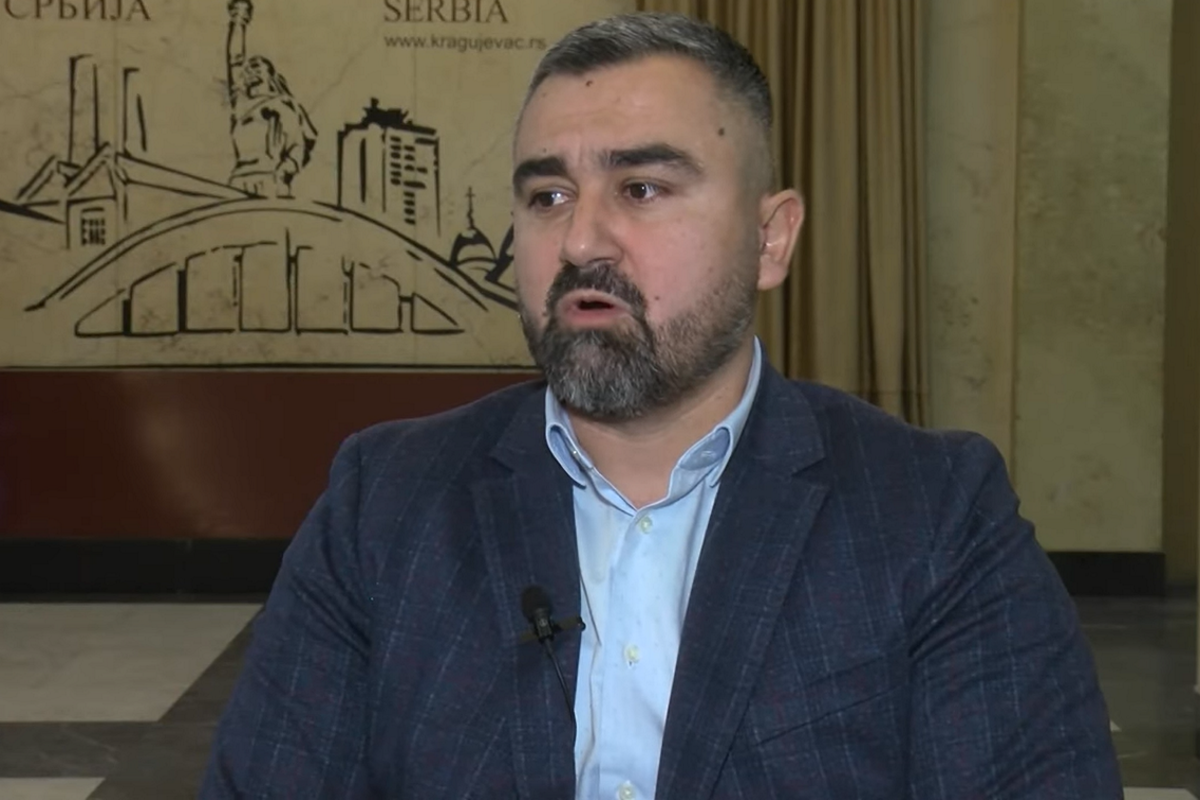
As part of the “Clean Serbia” project, 13 km of sewage network has been built in the suburbs of Kragujevac so far, this is the information presented by Deputy Mayor Ivica Momčilović for the local television.

According to Momčilović, work on the “Clean Serbia” project in Kragujevac is being carried out according to schedule at several locations in the suburbs, and such a pace will be continued in the coming period. “If we are trying to present the scale of everything that has been done, I must say that it is more than in the last 10 years”, said Momčilović and added: “Property legal problems are being solved at the same time so that there is no delay in the realization of this extremely important project for city. The second phase of the project envisages the reconstruction of the rainwater and sewage network in the inner city core. It is an undertaking that requires a very serious approach and logistics.”

The implementation of the “Clean Serbia” project in Kragujevac envisages the construction of a 360-kilometer sewage network, three wastewater treatment plants and a new landfill in Vitlis.

The value of the works is around 300 million euros.

Cooperation between Serbia and China and through “Clean Serbia”

Bilateral relations under the strategic leadership of the heads of our two countries will achieve even better development compared to what has been achieved. Construction of the Novi Sad-Subotica section will be intensified as part of the expressway project tracks on the Belgrade-Budapest route, several sections of the Miloš Veliki highway, the Belgrade Metro, as well as the “Clean Serbia” project, announced Chen Bo, China’s ambassador in Serbia.

The ambassador reminded that the bilateral cooperation between Belgrade and Beijing during 2022 produced results and announced that the cooperation between China and Serbia will bring new and more tangible benefits for our peoples. She is reiterated that in the first three quarters China became the largest source of foreign investments in Serbia and continued to maintain the position of its second largest trading partner.

Scientific and technological innovation, renewable energy, biotechnology, environmental protection and other fields will become a new development point of our bilateral cooperation, Chen Bo said.

We protect our rivers for future generations in 2023 as well

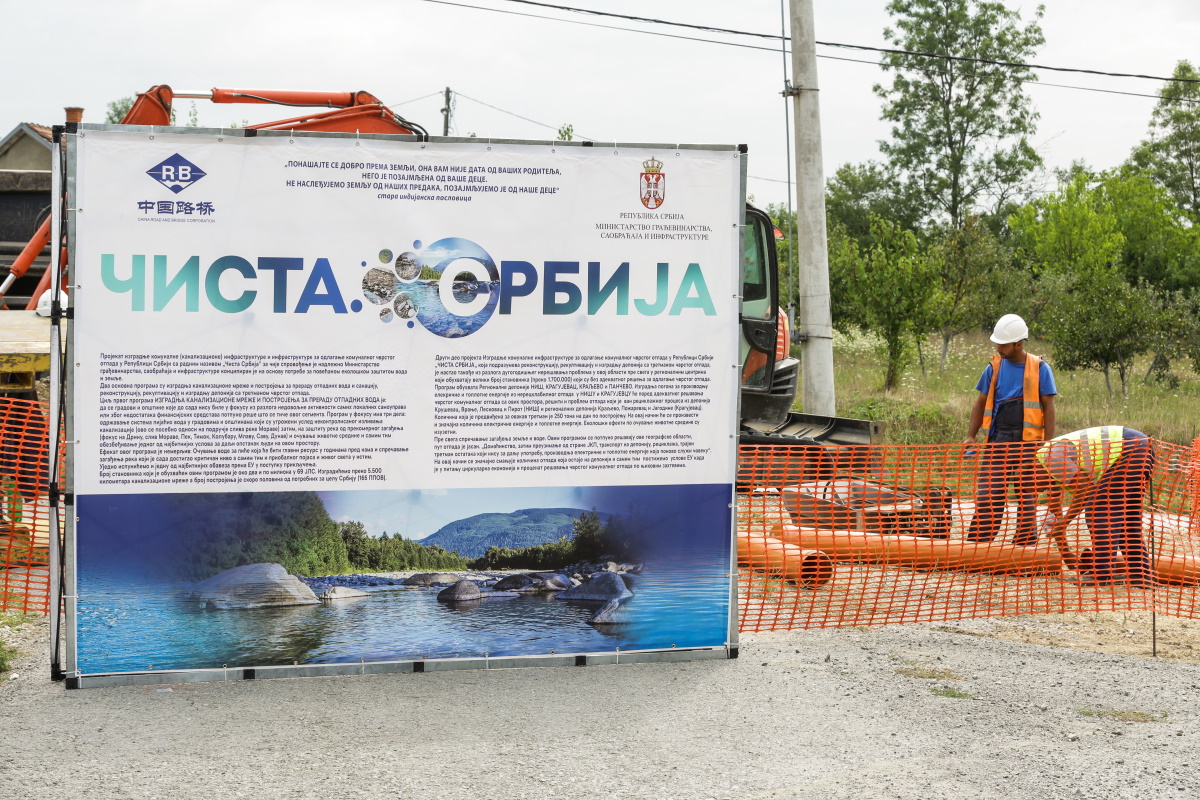
The project “Clean Serbia” is the largest project for the construction of communal infrastructure. The goal of the project is to maintain drinking water systems in cities and municipalities that are endangered due to uncontrolled sewage spills and to preserve the environment, thus ensuring one of the most important conditions for the continued survival of people in this area.

In 2022, new kilometers of sewerage network were built in 16 cities and municipalities, and in 2023, new cities and municipalities are expected by the project implementation contracts.

We save and protect our rivers! In order to achieve a higher standard for the citizens of Serbia, we are building sewage infrastructure, waste water treatment plants. To preserve our natural resources for future generations – Clean Serbia.

                                          CLEAN SERBIA WISHES YOU A HAPPY NEW YEAR

Milenković: Construction of Vranje through the “Clean Serbia” project

“Within the “Clean Serbia” project, together with the Ministry, we entered into a really demanding project,” said the mayor of Vranje dr Slobodan Milenković.

Summarizing the results achieved in 2022, the mayor of Vranje dr Slobodan Milenković, particularly highlighted the works related to the implementation of the “Clean Serbia” project.

“I must point out that, within the “Clean Serbia” project, together with the Ministry, we entered a really demanding project, which is the complete reconstruction of Kosovska Street. Baba Zlatina Street, in the city center, is also being completely reconstructed. I’ll admit, I’m personally not happy with the time it takes to complete all the activities. However, both streets have their own peculiarities, which significantly affect the dynamics of the works. I thank my fellow citizens for their patience, with the promise that the streets will eventually look as they should,” said Milenković.

Addressing his fellow citizens, Milenkovic pointed out that in total, more than 400 million dinars was allocated for asphalting, for the construction of the water supply, fecal and atmospheric sewage network.

“Also, the fecal sewage network in the streets: Đura Đaković, Dimitrij Tucović, Mišarska, Sava Kovačević, Caro Dušan, Karađorđev, Kralj Milan, Matija Gupac, Franše D Epere, Stevana Filipovića, Kosovska, Makedonska, Drvarska, in the block near Ivo Andrić street, block near Proletarian Brigades street, at the Sports Center, in Neradovac, Gornji and Donji Vrtogoš, Davidovac and Bunuševac,” stated dr Slobodan Milenković.

400 million euros for 16 municipalities in the south

The municipality of Doljevac and another 15 municipalities will expand the capacities of communal infrastructure in the next year as part of the “Clean Serbia” project. A meeting of representatives of the Ministry of Construction, Transport and Infrastructure with representatives of local governments from Doljevac, Svrljig, Vlasotinac, Bojnik and the City of Prokuplje was held in this Municipality.

At the meeting in Doljevac, representatives of the ministry pointed out that a total of about 400 million euros will be allocated for communal infrastructure projects in 16 municipalities in the south of the country for over 800 kilometers of network, which will cover about 200,000 people.

As it was said at the meeting, on the territory of the Municipality of Doljevac, a total of 45.6 kilometers of sewage network will be constructed in several villages. The project envisages the construction of fecal sewerage in Malošište with a length of 7.2 kilometers, a primary and secondary network for the settlements of Belotinac and Čaljinac with a length of 16.3 kilometers, a network in the eastern part of Pukovac, a secondary sewerage network for Doljevac, as well as collectors. The value of the works without VAT amounts to 961 million dinars. The plan is also to build wastewater treatment plants in Čapljinec and Doljevac.

Among the general data, it is stated that in the Municipality of Svrljig, about 6 kilometers of the network are being worked on, Vlasotince, where the project is expected to cover almost 80 kilometers, and the City of Prokuplje, where 26 kilometers of the sewage network will be built, as well as Bojnik.

“Currently, when we are talking about the south of Serbia, the works are being carried out in Svrljig, and it is planned that the other mentioned municipalities in this part of the country will enter the project implementation process at the beginning of next year. This was the first meeting in the south of Serbia, and I can say that it was very useful for all project participants. After the implementation of the planned project activities, the quality of life of people in both urban and rural areas will improve significantly, and the ecological aspect of this whole story will also improve, through the preservation of water resources”, said Isidora Burić, State Secretary of the Ministry. Burić reminded that the “Clean Serbia” project is the largest project of construction and reconstruction of communal infrastructure, foreseeing the construction of 5.2 thousand kilometers of sewage network and a total of 157 wastewater treatment plants, which will cover a total of 2.5 million inhabitants of our country.

The prerequisite for the start of the implementation of the project in municipalities and cities is the complete technical documentation that the Municipality of Doljevac has, so it is expected that the implementation of the “Clean Serbia in Doljevac” project will begin in mid-March next year.

“Realization of communal infrastructure projects is carried out through a total of three projects, of which “Clean Serbia”, which is being worked on with the Chinese partner CRBC, is the largest, with the aim of improving standards and the quality of life of the citizens of southern Serbia. A team will be formed at the Ministry of Construction and Infrastructure, especially the Communal Department, which will deal exclusively with “Clean Serbia”, said the state official secretary Dragan Stevanović.

foto: Radio Koprijan