Momirovic visiting the works in Kragujevac

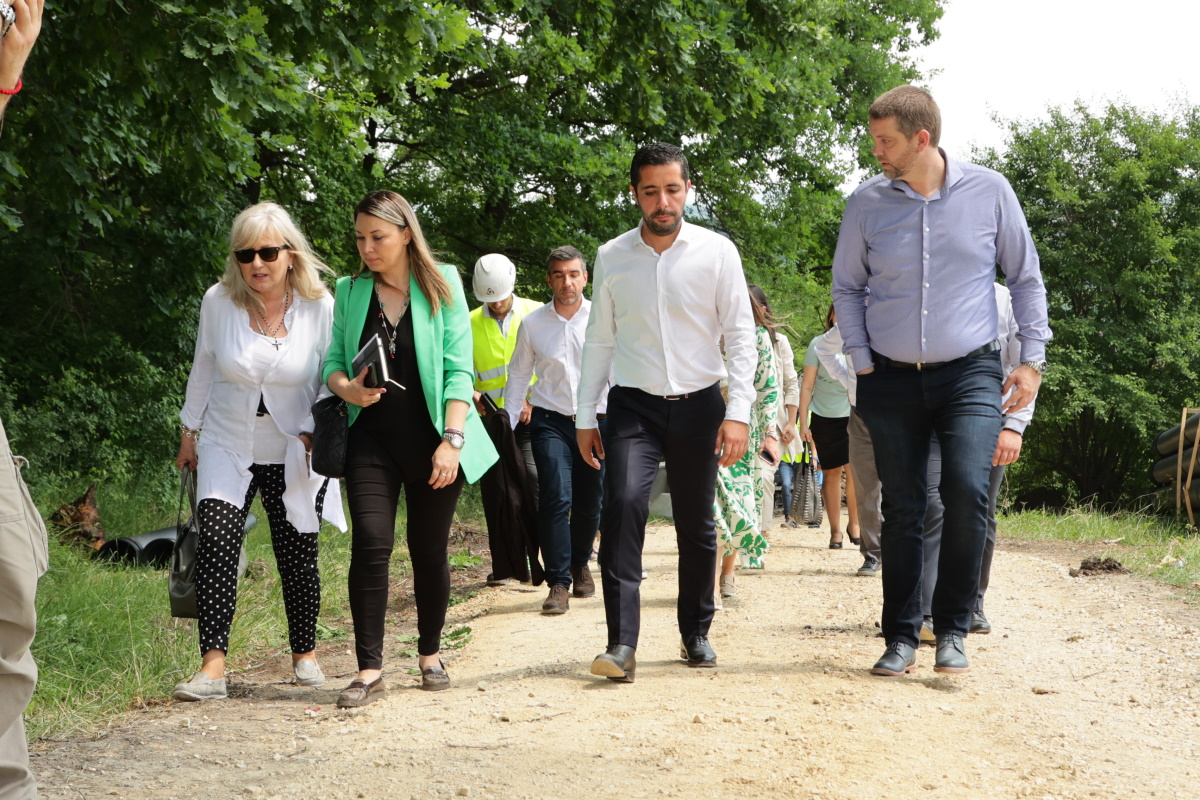
The Minister of Construction Tomislav Momirovic has visited the works on the location of Brdjanska Street in Kragujevac, as part of the “Clean Serbia” Project.

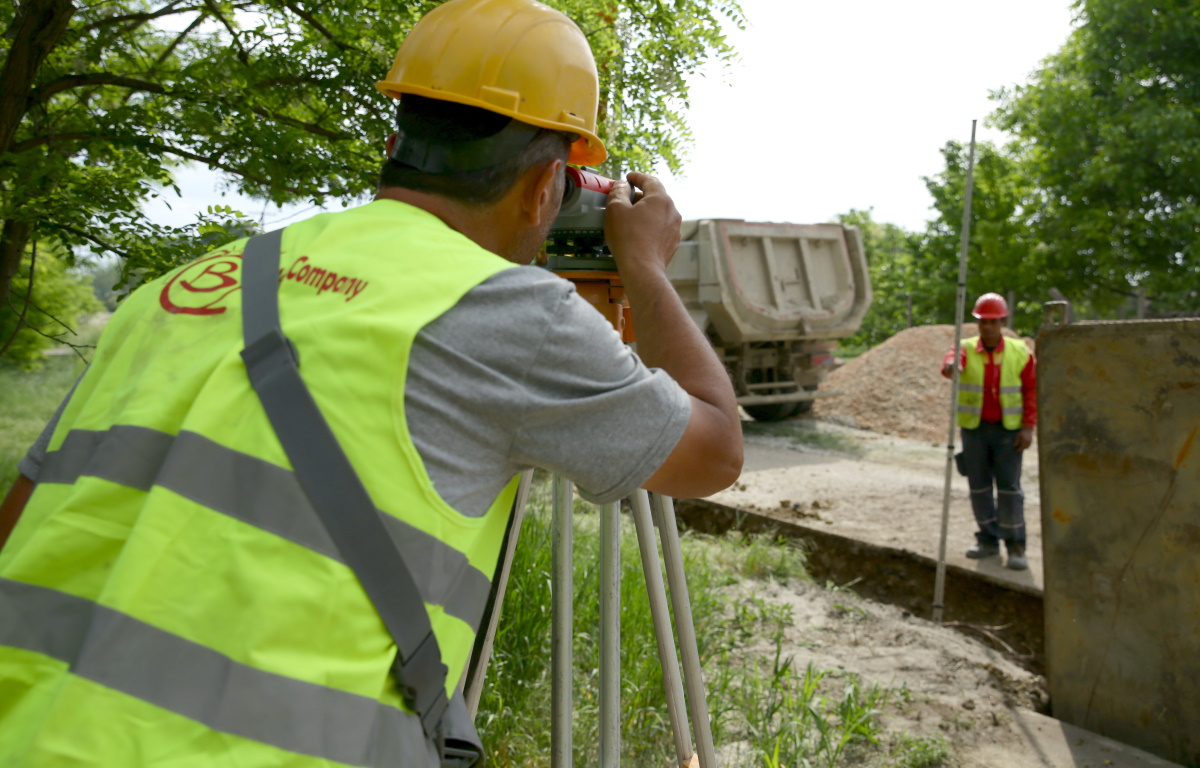
The works in the Brdjanska Street are going to be carried out in the length of 2,270m, and so far 214m of sewage network has been constructed. However, as the Minister has pointed out, the works in this street are not the only active site.

“Apart from the construction site in Belosevac, we have initiated works on three more locations in Kragujevac. We are building some 50 or so km of sewage network in the first phase, and the plan is to build 360 km of brand-new sewage network and address a huge environmental problem in Kragujevac. We want it to be a city of contemporary infrastructure and to connect the vast majority of citizens to a sewage network, and after that to build wastewater treatment plants in order to raise the environmental standard in Kragujevac up to the one of Western Europe”, says the Minister.

Mayor of Kragujevac,  Nikola Dasic has stated that this Project will cover every home, every household in the city and its vicinity so the problem of so called wild connections which do not end up in collectors of the Public Utility Company „Vodovod i kanalizacija”, but in water streams. That is why the citizens are able to pay off a legal connection to the new sewage network in 30 equal monthly installments.

In Kragujevac, as it is planned by the Project, the construction of 3,808.5 m of sewage network is under way while the works in the Municipality of Knic are being carried out in the length of 1,711.83m.

Water supply and sewage for 80% of the territory of Smederevska Palanka

Minister of Construction and Transport Tomislav Momirovic has confirmed during his visit to the Municipality of Smederevska Palanka that Smederevska Palanka is one of the 65 municipalities covered by the “Clean Serbia” Project, which will create conditions for the construction of a wastewater treatment plant.

With this Project, the Municipality of Smederevska Palanka will receive water supply and sewage on more than 80 per cent of its territory.

The biggest wastewater treatment factory will be constructed in Palanka, the other one will be for the villages of Kusadak and Ratari, third in Selevac, then Azanja, Bacinac, Stojacak and Golobok. Smaller villages will be connected to these seven plants.

Živković: Lajkovac and the surrounding villages will be covered by a sewage network

President of the Municipality of Lajkovac, Andrija Živković has highlighted that the “Clean Serbia“ Project is one of the most important projects in this Municipality in the last few decades. The works in this Municipality have reached Phase two, and currently, the works are being carried out on the construction of a sewage network in Jabučje.

“Last year, we have started Phase one of the Project, completed Rubibreza where 4km of sewage network was constructed, and a few days ago the works on Phase two of the Clean Serbia Project have begun on a sewage network which will cover our most populated place after Lajkovac, the Local Community of Jabučje, where 26 km of primary sewage network will be built, however in the center of the village secondary sewage will be constructed for vital facilities located in the center of Jabučje, as well as for several hamlets like Negić, roundabout for Tomići“, says Živković .

He has stated that on the very section five pumping stations will be constructed for the purposes of the sewage networl. The plan is that the entire sewage network gets connected to the pumping station Borverk, which Lajkovac has constructed independently a few years ago. “From there, later on, it will go towards a wastewater treatment plant which is on the border of Lajkovac and Ćelije and which has entered this Project and will be completely re-constructed and operational soon. The next phase, the start of which we are expecting, is the construction of the primary sewage network and construction of a brand-new plant in Bogovađa. This Project is important for the whole of Jabučje because of how it raises the economic awareness of the residents and with this Project, all locals will get the possibility of connecting to a sewage network, becase it is the 21st Century and that is necessary for living“, says Živković.

With the implementation of the “Clean Serbia“ Project, more than 3000 residents of the settlement of Jabučje and around 2000 households will receive a sewage network. Živković has stated that he expects the works to last for the remainder of the year and to be completed with the start of 2023.

“All hamlets of Jabučje from Viš, Staro selo, Donji kraj, Gornji kraj, Gaj to Serinka will be covered by a primary sewage network. A big thank you to the Government of the Republic of Serbia, the Ministry of Construction and its Minister Tomislav Momirović for recognizing the importance of the Project and Lajkovac being among first cities and municipalities to enter this Project and I hope that in the future we will have more good news regarding our municipalities. With the construction of this network, roads will be renewed on the territories where the sewage will be constructed, which will restore them to their original condition. That means that apart from the sewage network, road infrastructure will be upgraded as well and I expect the works to progress according to the planned dynamics“, says the president of the Municipality emphasizing that with the implementation of the “Clean Serbia“ Project, Lajkovac and its surrounding villages will bee 100% covered by a sewage network.

Green Municipality of Barajevo – 40 km of sewage network

During his visit to the Municipality of Barajevo, Deputy Mayor of Belgrade Goran Vesic has a announced 40 km of sewage network which will be constructed under the “Clean Serbia” Project.

Deputy Mayor of Belgrade has especially emphasized the importance of two project in which the City of Belgrade is currently investing funds, a sports hall and a wastewater treatment plant, as of key importance for the development of Barajevo.

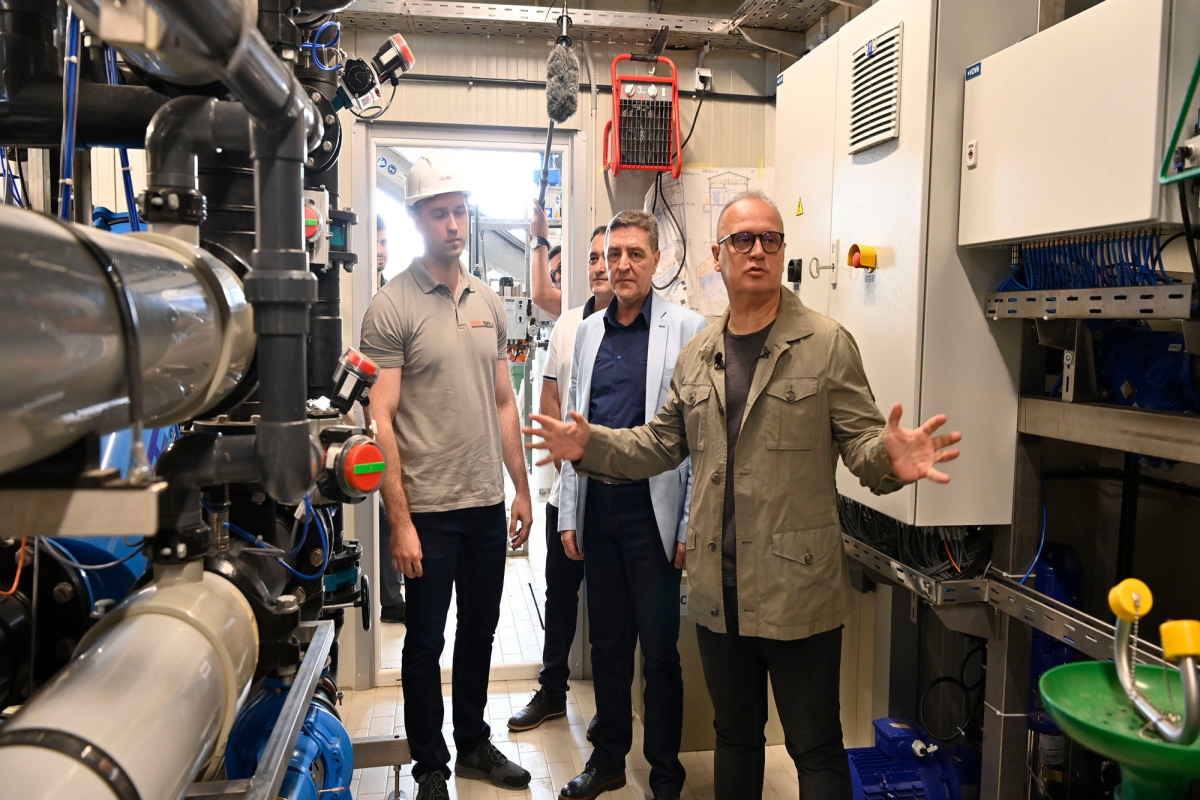
“The settlement of Gaj is the biggest urban settlement in Barajevo and we have invested 125 million RSD into this plant. It covers around 5,000 recipients i.e., treats nine liters of wastewaters per second and that way all wastewaters of this settlement will be treated and discharged in a purified state into the Barajevo river and the environment will no longer get polluted. The problem of the City of Belgrade is that around two-thirds of the city is covered by sewage, but at this moment, apart from a couple of smaller plants, we do not have wastewater treatment factories, so all our sewage gets discharged into the rivers Sava, Danube and other rivers untreated, which is unacceptable. That is why we are currently building three out of five wastewater treatment factories and a whole line of smaller plants like this one in Barajevo” says Vesic who has visited the plant which has started its trial operation.

A healthy environment is a key life element of every citizen, Vesic has especially emphasized and added:
“Within the ‘Clean Serbia’ Project we will build one more wastewater treatment plant in Barajevo itself and around 40 kilometers of sewage, which means that 40 per cent of Barajevo will be covered by this network. Some will say that is not enough, but 40 per cent is better than nothing, and considering the ruggedness of this municipality, a lot of time will be necessary in order to cover the entire municipality with sewage.  We will probably address isolated settlements with these smaller wastewater treatment plants, which is much more logical than to lay dozens of kilometers of pipes which would lead to a larger plant “, says the Deputy Mayor.

His opinion is shared by the President of the Municipality of Barajevo Slobodan Adamovic who has stated that the Municipality of Barajevo declares itself as “Green Municipality”.

“We will work on addressing the environmental problems in the future as well, we have managed to enter the ‘Clean Serbia’ Project and have received designs for the construction of a wastewater treatment factory and new 40 kilometers of sewage network in the first phase of the Project” says Adamovic, among other things.

Minister Momirovic visits the works in Lazarevac

Minister Tomislav Momirovic has visited the works on the construction of sewage network in Lazarevac within the „Clean Serbia“ Project. Currently, the works on the construction of 80 km of sewage network are underway.

„In these difficult circumstances everyone is stopping their investments and looking at an uncertain future, our goal is to carry through all investments and provide a better life for people, higher wages and pensions. I am glad to be in Lazarevac, in the local community of Susnjar, which is a third location in Lazarevac to be opened for works. The Government of the Republic of Serbia is working on a total of 80 km of sewage infrastructure in Lazarevac,  and we are also building roads here”, says the Minister of Construction and Traffic Momirovic.

The works on the construction of the sewage network within the “Clean Serbia” Project in the Municipality of Lazarevac and at the location of Veliki Crljeni are going according to the planned dynamic and in accordance with the weather conditions and field requirements. So far 8,680.39 meters of brand-new sewage network has been built in the Municipality of Lazarevac, while at the location of Veliki Crljeni, 4,518.9 meters of sewage network has been built.

,,On the territory of the Municipality of Lazarevac almost nine local communities which have anticipated in the “Clean Serbia” Project are covered. Over 3500 households in these nine local communities will receive a sewage network, and a main wastewater collector is being constructed in the length of 5.7 kilometers Additionally, we are thankful to the Minister for the road infrastructure which is currently being built in the Municipality of Lazarevac” says Bojan Stevic, president of the Municipality of Lazarevac.

In the Municipality of Lazarevac, construction of 25,052.88 meters of sewage network and one wastewater treatment plant which will cover 40 000 residents is planned. Additionally, within the “Clean Serbia” Project, in the settlement of Veliki Crljeni, 52,597.59 meters of sewage network will be built, as well as a wastewater treatment plant which will cover 20 000 residents.


Works are going according to plan

Works on the construction of the sewage network in 15 Municipalities and Cities with which the contracts were signed within the “Clean Serbia” Project are going according to the planned dynamics.

This year, signing of new contracts is planned, and that way the construction of sewage network will be possible in even more cities, which will also unequivocally raise the living standard of residents there and preserve the rivers in their immediate vicinity.

SN. Site What is worked on Lengths being worked on now
1. Lajkovac Sewage 2,267.85
2. Knić Sewage 1711.83
3. Kragujevac Sewage 3808.5
4. Krupanj Sewage 874.83
5. Kladovo Sewage Rtkovo/ 6755.26 m

Velika Vrbica/ 7788.48 m

Korbovo/7675.98 m

Total: 22 219,72 m

6. Lazarevac Sewage 8.838.79
7. Mionica Sewage 125.89
8. Obrenovac Sewage 5,766.12
9. Svrljig Sewage 831.9
10. Varvarin Sewage 27,036.00
11. Vranje Sewage 4,030.00
12. Kučevo Sewage 7115 m
13. Novi Sad Sewage 23775
14. Novi Bečej Sewage 24773
15. Banja Vrujci Sewage 604.91

Due to the continuous decrease in the quality of waters, as well as due to the intensive and imbalanced use of waters in different regions and industries, which is not linked enough to the adoption of coherent practices of water recycling and reuse, the future availability of waters is in many regions jeopardized.  That is way, on the threshold of the third millennium, water can be considered a strategic resource, as well as a trade good, and programs of sustainable water management must be implemented on local, regional, national and international levels (Teodosiu et al., 2003).

Construction of a Waste Management Center expected in Niš

Works on the construction of sewage network, within the ’Clean Serbia’ Project are currently ongoing in  Niš in three municipalities, at eight locations. Three locations are in Svrljig, one in Varvarin and four in Vranje. The Minister of Construction Tomislav Momirović has spoken during his visit to this city with the Mayor of Niš Dragana Sotirovski on the topic of regional landfill in Niš.

„One of the topics was the construction of a regional landfill, which is already planned within the ‘Clean Serbia’ Project, where 11 local self-governments are participating, including the City of Niš. Niš has allocated 16.5 million EUR from its local budget for this purpose, in order to, together with other local self-governments participate in the expropriation of land for the future landfill, which certainly means a lot for us, because that way we can partly close our old landfill and are helping the local self-governments address a long-term waste problem” says Sotirovski.

For the City of Niš a construction of a Waste Management Center with a thermovaluer is planned (a plant for co-incineration of solid mixed municipal waste) of the capacity up to 250 T/day, with all necessary accompanying contents (landfill, leachate treatment plant, administrative building…) The thermovaluer produces electrical energy and warm water, which can be used for heating of the facility. Contracted space area is 500,000m2. Additionally, repair and recultivation of the existing sanitary landfill on the surface of 135,700 m2 is planned.  Regional Waste Management Center will be joined by the following municipalities and cities: Sokobanja, Prokuplje, Blace, Žitorađe, Kuršumlija, Merošina, Ražanj, Doljevac, Aleksinac, Svrljig and Gadžin Han. Number of residents covered by the Regional Center in Niš is 484,094.


Giaufret: EU has invested more than 400 million EUR for environmental protection in Serbia

His Excellency Emanuele Giaufret, Ambassador and Chief of EU Delegation in the Republic of Serbia has especially emphasized in his blog post on the web page of the Ministry of European Integration ecology as a field of investment of the EU in Serbia.  Giaufret states that there are funds but that the interest of Serbia for “Green Transformation” investment is also evident. Investments primarily pertain to wastewater treatment plants and solid waste management.

“Serbia has started the 2022 optimistically in terms of environmental protection after Cluster 4 was opened in December 2021 which includes transport, energy, Trans-European networks and the environment and climate change. In practice, the opening of negotiations for the Cluster of Chapters means that in these fields, substantial negotiations may commence. That also means that it is necessary for Serbia to continue investing significant effort in order to fulfill necessary terms for the closing of said Chapters” Giaufret writes in his blog post titled “The EU is a partner of Serbia on the Green Transformation Path”.

In one part of a blog post titled “Focusing on Serbia”, the Ambassador of the EU states that Serbia has expressed founded concern at the COP26 Conference regarding the financing of the Green Transition, providing energy security and support to the workers within the transition to green jobs and green industry.

“Goods news is that there are financial means. However, in order for ‘Green Financing’ to make sense, it is necessary to increase ambitions in the climate area. Climate ambitions of every country are reflected in the nationally determined contributions (NDC) which represent plans with goals of reducing emissions and adaptation usually up to 2030, and contain information on its fulfillment. Adoption of revised nationally determined contributions which Serbia has announced before the COP26 Conference is the best way to ensure access, not only to global funds in environmental and climate area and bilateral  grants, but also to cheap Green loans and other credit funds. Substantial economic growth of Serbia and large investments in infrastructure are evident”, Giaufret says.

He also sates that Serbia currently spends three times more energy per unit of GDP than the EU average. 

“Concurrently, we would have to work together adapting to already altered climate. We know from multiple studies that Serbia and Southeast Europe are in a region which is warming faster than the global average. That means that it will be greatly impacted by climate change and that children which are born today will probably experience the dramatic consequences of intensive floods, forest fires, droughts and huge blows to the economy. Farmers will lose their income and infrastructure like roads and railroads will suffer great consequences. Nevertheless, the price of absence of any reaction is far greater than the price of acting. Considering its sensitivity to negative consequences of climate change, Serbia could suffer losses amounting to 13 million Dollars by the end of this decade” Giaufret claims and states that Serbia needs more resistant crops, water storage systems (such as dams and reservoirs) as well as drainage systems. Furthermore, construction of wastewater treatment plants would reduce organic pollution of watercourses and lakes and would insure their sustainability due to increased temperatures and expected water shortages.

In order to initiate the Green Transformation, the European Union has prepared the Green Agenda for the Western Balkans which is a part of the economic and investment plan of the European Union for the Balkans.

“The EU for the Green Agenda in Serbiain cooperation with the Ministry of Environmental Protection, UNDP, the Swedish Agency Sida and the European Investment Bank (EIB) will help Serbia to improve policies, take concrete measures and increase Green Transformation investments. It is a program worth 8 million EUR for the reduction of air pollution, combating biodiversity loss, support for firms to become more circular etc. Many people in Serbia are becoming increasingly more worried for the environment. Recent demonstrations organized in the country against, for example, air pollution show that these questions are gaining more importance” the Ambassador claims.

Giaufret has dedicated a particular segment of his blog to specific investments so far the EU has made to Serbia in the area of ecology. Wastewater treatment plants are in the first place:

“The European Union supports the acquisition process of Serbia in terms of environmental and climate agency in three main directions:

  1. Investments: So far, the EU has invested more than 400 million EUR in environmental protection. Serbia has added 200 million EUR to that which makes for 600 million EUR in total for water supplying, wastewater treatment plants, biodiversity protection and solid waste. EU has invested an additional 90 million EUR for flood recovery, flood protection and reduction of unfavorable weather risks. The EU financing is significant and it is a key quality of the EU expertise. We also need:
  2. Political dialogue with the Government, Municipalities, and the civil society;
  3. Investing in people and institutions in order to increase the capacities on the national and local level, build and conform the legislation with the European acquis”, Giaufret has singled out.

“Clean Serbia” – healthy attitude towards waters

Just how much the lack of sewage network jeopardizes the water streams in our country is best illustrated by the data of the Environmental Protection Agency, because wastewaters in Serbia annually contain 109 tons of Zinc, 55 tons of Cobalt, 17 tons of Chromium, 13 tons of Arsenic, 12 tons of Led and 11 tons of Nickel, with a growing tendency.

At the territory of Belgrade alone, there are 119 direct sewage outlets into the rivers Sava and Danube.

Great pressure is put on the status of surface waters of Serbia by drains of untreated municipal and industrial wastewaters.

It is estimated that the total production of wastewaters in Serbia is 3.5 million cubic meters a day.

The pollution of water is mostly a consequence of uncontrolled drainage of pollutants of various origins.

Our waters are polluted by:

-industrial wastewaters

– household wastewaters

– waters coming from farms and agricultural homesteads where pesticides are being used

– waters flowing from city streets

The existing level of collection, drainage and treatment of wastewaters in the Republic of Serbia is at a significantly low level. In accordance with the interests and goals of the Republic of Serbia for the protection of surface and ground water quality, protection of watersupply source, preservation of health of its citizens and general environmental protection, financial means are allocated for the achievement of these goals, i.e. for the financing of construction and reconstruction of water facilities for the protection from pollution. Serbia is changing its attitude towards waters!

Therefore -“Clean Serbia”

European technologies with professional analyses of the outline of the „Clean Serbia“ Project

Unfortunately, Serbia is not a country which can brag with achieved ecological standards of Europe and developed countries of the world. „Clean Serbia“ Project is one way to achieve European standards and preserve our natural resources for the future generations.

CLEAN SERBIA Project covers two projects: Project of construction of municipal (sewage) infrastructure and Project of construction of infrastructure for disposal of solid municipal waste in the Republic of Serbia. Within the scope of these projects, construction of a sewage network in the length of 5,206,679.31m and 165 wastewater treatment plants which will cover around 3,000,000 residents at 89 locations is planned.

Additionally, the project will cover repair, reconstruction, re-cultivation and construction of solid municipal waste management centers in Niš, Kragujevac, Kraljevo and Pančevo with two thermovaluers (plants which will convert waste into electrical and thermal energy).

The works have already begun and are taking place at 16 locations in 14 local self-governments (Novi Sad, Kragujevac, Knić, Novi Bečej, Kučevo, Obrenovac, Lazarevac, Mionica, Svrljig, Kladovo, Lajkovac, Vranje, Krupanj, Varvarin) where a sewage network in the length of 680,344.36m and 26 wastewater treatment plants which cover 195,100 residents are being constructed.

So far almost 60,000 m of sewage network has been constructed at the aforementioned 16 locations. Wastewater treatment plants for all locations are in the designing phase.

In the current 2022, opening of additional 21 locations for the construction of sewage network and wastewater treatment plants across the Republic of Serbia is planned.

The entire Project was initially conceived as the Project to protect Serbian Rivers, primarily all three Morava Rivers, Drina and Kolubara Rivers.

Implementation of the Project itself is of utmost significance for the Republic of Serbia, because our country is currently in the biggest and financially most straining phase in the field of quality water protection, and that is mirrored in the construction of almost 6000 kilometers of new sewage network and more than 250 wastewater treatment plants, out of which the Ministry of Construction is building almost 200 plants (apart from „Clean Serbia“, two more projects are being implmented – a project with the KfW Bank and a project with Hungary).

This way, the problem that 3,000,000 residents share in over 90 cities and municipalities in Serbia will be addressed.

The official data indicate that in the Republic of Serbia, less than 8% of municipal wastewaters are being treated before discharge. That is a direct consequence of a small number of operational wastewater treatment plants which provide an appropriate degree of treatment, which directly influences the appropriate quality of waters discharged into the environment.

The biggest pollutants of waters are municipal and industrial wastewaters which are being directly discharged into water streams without previous treatment.

The percentage of the population covered by wastewater treatment, according to the data from 2020, was 14.1% in 2018, out of which 13.1% was at least connected to a secondary treatment.

Underdeveloped sewage network poses an additional problem, which leads to a low level of municipal wastewater retention.

It is an indisputable fact that only around 1,572,314 households are connected to a sewage system in the Republic of Serbia, while the rest have to use a cesspool.

As a consequence of low-level retention and treatment of wastewaters, in the water streams of Serbia there is an unacceptably high content of potentially toxic elements even according to the level of maximally allowed concentration and frequency of its occurrence.

Industrial wastewaters, which are frequently discharged into the drainage systems of wastewaters from households without any prior treatment of quality control, pose a special problem and that additionally burdens the existing systems.

Treatment of municipal wastewaters has been acknowledged as one of the priorities in the Republic of Serbia, it is in all strategic documents and it is an unavoidable part of the official policy which analyzes the field of waters. In the process of defining a negotiating position ofr Chapter 27 it has been identified as financially most demanding field which carries two thirds of all investments into the water sector.

The stated facts are generally known and they are the very motivation for the Ministry of Construction and the Project itself, so that Serbia can preserve its natural resources, improve the living standard of its citizens and contribute to general efforts and aspirations to become a part of the European family.

Construction of the sewage network in cities and municipalities of Serbia will be completed with the construction of Wastewater treatment plants (WWTPs).  When it comes to the construction of the aforementioned wastewater treatment plants, it is necessary to emphasize that the Project plans for the implementation of best and proven technologies for our circumstances, technology of the most eminent global manufacturers. It is important to accentuate that all technologies which are already in the designing phase are applied in all European cities.

„Clean Serbia“ Project plans for the application of SBR, MBR and MMBR technologies. We remind that the technology which will be applied in the Project is already implemented by the European companies in Raška, Kruševac, Čajetina.

The very begining of the implementation of the „Clean Serbia“ Project was preceded by a series of professional analyses of all available and widely used technologies. Three key parameters, according to which the analyses were conducted, were taken into consideration: the size of the plants which depents on the size of the city, the recipient and the quality of incoming untreated water.

The mentioned analyses were conducted by the most eminent Serbian professors whose contribution does not end there, they actively participate and follow the implementation of the Project, from a scientific standpoint.

OUR LAND MUST BE CLEAN – OUR RIVERS MUST BE CLEAR – WATER WHICH WE DRINK HEALTHY AND GOOD – HEALTH OF OUR CITIZENS IS A PRIORITY AND MAIN GOAL OF THESE PROJECTS!